
Space
ANSTO has a range of capabilities and expertise to support aerospace and space research.


Showing 361 - 380 of 673 results
ANSTO has a range of capabilities and expertise to support aerospace and space research.
ANSTO is part of collaboration conducting experiments to redefine the kilogram linking it to a fundamental constant of nature.
A new systematic investigation of the origins of atomic structural distortions in compounds containing uranium has relevance for spent nuclear fuel .

ANSTO is dedicated to identifying opportunities for the application of knowledge and technology developed by the organisation for a wide range of industry applications.
Collaboration finds that old carbon reservoirs are unlikely to cause a massive greenhouse gas release in a warming world.

At ANSTO we understand that diverse teams produce better outcomes – and we value the merit that a diverse perspective can bring to the quality and outcomes of our work, and the way we get the job done.
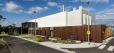
Frequently asked questions on the Mo-99 Manufacturing Facility and the ANSTO Nuclear Medicine project.

Dr.
The first demonstration of reversible symmetry lowering phase transformation with heating.
Radiocarbon study provides insight into soil carbon dynamics and effects of agriculture.
ANSTO is celebrating the official opening of HIFAR, Australia’s first nuclear reactor, sixty-five years ago.
Using the theory of compressed sensing technology, a team of physicists and scientists invented and developed the CORIS360® platform imaging technology. Compressed sensing imaging can generate an image with far fewer samples compared with traditional imaging techniques.
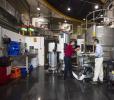
ANSTO offers a diverse range of career opportunities within science, engineering, corporate services and trade disciplines.
ANSTO’s Innovation Precinct welcomes NSW Government’s $12.5 commitment funding.
ANSTO has hosted its second IAEA Practical Introduction to Nuclear Forensics Regional Training Course for representatives of member countries from South-East Asia, sharing expertise on the theoretical and practical aspects of nuclear forensics to respond to incidents of nuclear or other radioactive material out of regulatory control.