
What are radioisotopes?
Radioisotopes are widely used in medicine, industry, and scientific research. New applications for radioisotopes are constantly being developed.


Showing 41 - 60 of 261 results
Radioisotopes are widely used in medicine, industry, and scientific research. New applications for radioisotopes are constantly being developed.
Monash University, University of Queensland and Australian National University researchers have used ANSTO’s Australian Synchrotron in their study of meteorites found on Earth that could be used in future to find evidence of life on the planet Mars.
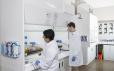
ANSTO’s Radioanalytical Chemistry (RAC) facility combines techniques in radiochemistry and radiological measurement by alpha spectrometry, gamma-ray spectrometry, and liquid scintillation analysis to deliver radiological assessments.

With more than 50 years of experience in monitoring natural and anthropogenic radionuclides in the environment, ANSTO can provide the crucial data and insights you need to assist with the planning and risk management associated with oil and gas decommissioning.

Dr Karina Meredith was appointed Director of the new Research and Technology Group for Environment effective 15 January 2024.

In Australia and the Southeast Asia basin, the ANSTO facility offers a wide range of unique nuclear-beam techniques for cultural heritage research.

The outcome could have significant implications for better monitoring, management and remedial action of groundwater globally.
PhD candidate Vienna Wong is using her FutureNow Scholarship to research ultra-high temperature ceramics, which are emerging materials for extreme environments.
Radiocarbon dating at ANSTO has supported new archaeological research conducted by Flinders University and the University of Queensland that describes significant earth mound features used for cooking that were created by Aboriginal people in the Riverland region of South Australia.
Radiocarbon dating at ANSTO’s Centre for Accelerator Science provided strong evidence that some culturally significant trees on Minjerribah (North Stradbroke Island) have persisted for up to more than 500 years

Explore ANSTO's range of publications and reports available for the public.
Environmental scientists at ANSTO have been undertaking research to gain a better understanding of the potential impact of contaminants on decommissioned offshore oil and gas infrastructure since 2017
The process by which plastic degrades in the ocean facilitates its entry into the natural carbon cycle efficiently as carbon dioxide.