Common drug source of insights into formation of 'butterfly' crystals
Insights into the crystallisation process of twin crystals important for drug production.


Showing 41 - 60 of 371 results
Insights into the crystallisation process of twin crystals important for drug production.
Stronger research link with IAEA with the establishment of Collaborating Centre at ANSTO to support environment and cultural heritage activities
Dr Catalina Curceanu will explore exotic atoms and impossible phenomena in the universe.
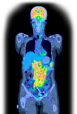
Students explore the medical applications of radioisotopes using an online, scenario-based learning experience.
Students will:
A student workbook to accompany this module is available. Answers available upon request via education@ansto.gov.au

Highlights of the Magnetism Project.
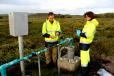
Water is a resource that needs careful management to ensure it is used sustainably. In this data set, students analyse real research data about the sustainability of groundwater on Rottnest Island.
Students will:
- understand the concepts of groundwater and aquifers and the role of the water cycle
- use MS Excel to construct simple graphs (or draw graphs by hand)
- interpret and analyse graphs and other representations of data
- investigate the effects of a changing climate on groundwater resources
- distinguish between correlation and causation
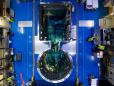
Participate in live radiation demonstrations, cover syllabus content and visit ANSTO virtually during our online depth study classes for Year 12 Physics.
- Participate in live demonstrations to review the properties of alpha, beta and gamma radiation.
- Learn about radioactive decay, half-life and methods of detecting radiation, including with a cloud chamber.
- Define and understand applications of fission, fusion, binding energy and mass defect, and investigate the structure and function of the OPAL multipurpose reactor.
- Investigate the role and operation of particle accelerators at ANSTO.
Cost: $90 per class.
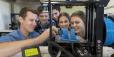
This tour is an introduction to isotopes, radioactivity and half-life, and the real-life applications of these concepts. Students will do a series of hands-on activities using the workbook below.
We are working on new content to address the new 2026 NSW Science Stage 5 (Year 9-10) syllabus.
All tours are available Monday to Friday for Years 7 to 12 classes. The cost per student is $12.50 and teachers are free.
Please print enough copies of the relevant workbook for your class before your visit to ANSTO.

Publications and resources from the Powder Diffraction beamline.
An investigation that set out to resolve some of the uncertainty in the sources and quantities of pollutants reaching Antarctica has produced a new experimental technique to identify and characterise recently terrestrially-influenced air reaching Antarctica.

Rare earth elements will be a key area of focus for the Australian Nuclear Science and Technology Organisation’s Minerals unit as it welcomes a $13.9 million funding allocation under the Australian Critical Minerals Research and Development Hub
The Australian Industry Becquerel Traceability Program (AIBTP) provides facilities with direct measurement traceability to the Australian standard for the activity of radionuclides used in Positron Emission Tomography (PET).
Insights into the behaviour of structural materials in a molten salt environment