Search hero banner

Search results

Showing 41 - 60 of 136 results

Local environmental monitoring

Environmental Protection

ANSTO is committed to minimising the environmental impact of its activities and to implementing strategies which have a positive effect on the environment. The ANSTO Work Health Safety and Executive Committee oversees this process.


Australian Synchrotron

The Australian Synchrotron

A world-class national research facility that uses accelerator technology to produce a powerful source of light-X rays and infrared radiation a million times brighter than the sun.

High Performance Macromolecular Crystallography Beamline (MX3)

High Performance Macromolecular Crystallography Beamline (MX3)

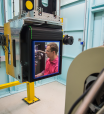
The High Performance Macromolecular Crystallography beamline will enable the study of very small (sub-5 micrometre) or weakly diffracting crystals, providing a state-of-the-art high-throughput facility for researchers. MX3 will be able to study the structures of large proteins and protein complexes for virology, drug design and industrial applications via goniometer mounted crystals, in-tray screening, or via serial crystallography methods.

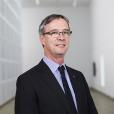
Elliot Gilbert
Lead, Food Materials Science; Instrument Scientist, QUOKKA (Small-Angle Neutron Scattering); Honorary Professor, CNFS, The University of Queensland

Role at ANSTO

Globe

Australian access to overseas synchrotrons

The International Synchrotron Access Program (ISAP) is administered by the Australian Synchrotron and is designed to assist Australian-based synchrotron users to access overseas synchrotron related facilities.

Management of nuclear reactor fuel

Management of nuclear reactor fuel

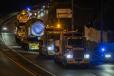
ANSTO has safely managed its radioactive waste for over 60 years. Waste is managed in accordance with national and international standards.

hifar-history-web

Our History

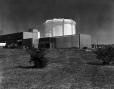
In April 15, 1953, Australia entered the nuclear science arena, when the Atomic Energy Act came into effect. The Australian Atomic Energy Commission (AAEC) followed and in 1987 the AAEC evolved into the Australian Nuclear Science and Technology Organisation (ANSTO) as it’s known today.

ANSTO welcomes $13.9M critical minerals funding

Rare earth elements will be a key area of focus for the Australian Nuclear Science and Technology Organisation’s Minerals unit as it welcomes a $13.9 million funding allocation under the Australian Critical Minerals Research and Development Hub

Scientists

Australian Critical Minerals Research & Development Hub

The Australian Critical Minerals Research and Development Hub (the Hub) unites the expertise of top Federal science agencies: ANSTO, Geoscience Australia, and CSIRO with the aim of addressing technical challenges and drive collaborative research across the critical minerals value chain.

Pagination