
Kowari - Strain Scanner
Kowari, a residual stress diffractometer, can be used for ‘strain scanning’ of large engineering components as large as 1000 kilograms.


Showing 41 - 60 of 114 results
Kowari, a residual stress diffractometer, can be used for ‘strain scanning’ of large engineering components as large as 1000 kilograms.
ANSTO is taking its innovative ANSTO Synroc® and CORIS360® technologies to the world stage at the Waste Management Symposia 2024 in Phoenix, Arizona USA this week (10 – 14 March 2024). Joining over 45 other countries and around 3,000 attendees, an Australian Government contingent comprising of ANSTO and the Australian Radioactive Waste Agency is in attendance to showcase Australia’s extensive radioactive waste management capabilities.
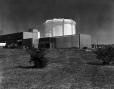
In April 15, 1953, Australia entered the nuclear science arena, when the Atomic Energy Act came into effect. The Australian Atomic Energy Commission (AAEC) followed and in 1987 the AAEC evolved into the Australian Nuclear Science and Technology Organisation (ANSTO) as it’s known today.

Research can improve both food processing and food product development.

ANSTO plays a leading role in measuring and characterising fine particles from a range of locations around Australia and internationally.

The BRIGHT Nanoprobe beamline provides a unique facility capable of spectroscopic and full-field imaging. NANO will undertake high-resolution elemental mapping and ptychographic coherent diffraction imaging. Elemental mapping and XANES studies (after DCM upgrade) will be possible at sub-100 nm resolution, with structural features able to be studied down to 15 nm using ptychography.

The Advanced Diffraction and Scattering beamlines (ADS-1 and ADS-2) are two independently operating, experimentally flexible beamlines that will use high-energy X-ray diffraction and imaging to characterise the structures of new materials and minerals.

A world-class national research facility that uses accelerator technology to produce a powerful source of light-X rays and infrared radiation a million times brighter than the sun.
Research undertaken by Flinders University, the University of Cincinnati (US), Guangzhou University (China) and ANSTO has evaluated a new process to encapsulate fish oil in nanoparticles

Role at ANSTO

The new facility will be built around a product line of ANSTO’s design – a new Technetium-99m generator – that will enable greater process automation than is possible with existing technology, leading to improvements in efficiency, quality and importantly the highest levels of production safety.


This scholarship recognises outstanding ability and promise in the field of nuclear science and technology, specifically as it applies to nuclear energy. Successful applicants will demonstrate a history of interest in nuclear energy and a desire to continue this interest.
Routine transport of spent nuclear fuel