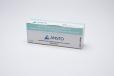
ANSTO is the new production partner of OncoBeta® GmbH in Australia
Innovative medical device Rhenium-SCT® therapy for non-melanoma skin cancer is now available in Australia


Showing 41 - 60 of 2480 results
Innovative medical device Rhenium-SCT® therapy for non-melanoma skin cancer is now available in Australia

With more than 50 years of experience in monitoring natural and anthropogenic radionuclides in the environment, ANSTO can provide the crucial data and insights you need to assist with the planning and risk management associated with oil and gas decommissioning.
Over the past 70 years ANSTO has been building Australia’s nuclear expertise and despite being small in scale, today we are complex and sophisticated nuclear nation.
Spatz neutron reflectometer becomes 15th neutron scattering instrument that is used for studies of biological materials and other soft matter.
The shutdown of a nuclear reactor can be done manually by an operator following a well-established operating procedure.
Dr Helen Maynard-Casely will be taking neutron physics on a road trip
ANSTO’s trusted advisor on Dharawal cultural heritage Les Bursill OAM has passed away suddenly following illness. Aboriginal and Torres Strait Islander viewers are advised that this webpage contains images of people who have died.
ANSTO research focuses on an advanced form of cancer treatment under consideration in Australia.
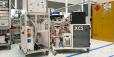
Several of our instruments are capable of incorporating gas or vapour delivery to the sample under investigation.
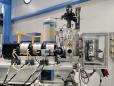
The high-energy heavy-ion microprobe is used for the characterisation or modification of material properties at depths from approximately 1 micrometre to maximum depths of up to 500 micrometres from the material surface.

When an energetic ion beam hits a sample it will interact with the atoms through a number of very complex interactions. By detecting and measuring the reaction products resulting from the various interactions and their intensities, you can obtain quantitative data on the sample's constituent elements and their spatial distribution.
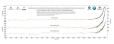
This poster shows greenhouse emissions measured in Antarctic ice cores and the Cape Grim monitoring station until 2017.
NSTO’S major project to introduce eight new beamlines at the Australian Synchrotron has reached a milestone with the delivery of ‘first light’ to the new MEX-1 beamline.
Dr Andrew Smith has just finished collecting ice cores and snow samples on the summit of Law Dome in Antarctica,