
Corrections to Annual Reports
ANSTO publishes amendments to annual reports on this page.


Showing 441 - 460 of 793 results
ANSTO publishes amendments to annual reports on this page.

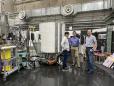
The instrument is ideally suited to study of spin and lattice dynamics, magnon and phonon dispersion relations in single crystal samples.

ANSTO as a leading science research organization in Australia is committed to the ethical, humane and responsible care of animals used for scientific purposes.
Southern Cross researcher Dr Alana Gall, who recently became an ANSTO research Fellow, has been awarded more than $640,000 to lead a research program focused on First Peoples' Cultural Medicines (also called bush medicine) in Australian healthcare.
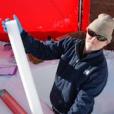

Researchers and industry partners from UNSW Australia, the Australian Centre for Nanomedicine, Children’s Cancer Institute and Inventia Life Sciences Pty Ltd have been awarded the 2021 ANSTO Eureka Prize for Innovative Use of Technology for their method to rapidly-produce 3D cell structures
A rare collection of traditional Aboriginal wooden objects in varying degrees of preservation found along a dry creek bed in South Australia have been dated to a period spanning 1650 to 1830 at the Centre for Accelerator Science at ANSTO.
In an effort to understand why the Tongan Hunga volcano eruption was so explosive, internationally-recognised volcanologist Prof. Shane Cronin of the University of Auckland and associates rely on beamlines at the Australian Synchrotron to support comprehensive research on the Hunga event.
Biochemical and structural studies to elucidate protein interactions of the new compounds and target molecules included X-ray diffraction at the Australian Synchrotron.
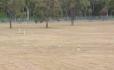
ANSTO is responsible for the Little Forest Legacy Site (LFLS) located within the ANSTO Buffer Zone boundary. This site, formerly known as the Little Forest Burial Ground (LFBG), was used by the Australian Atomic Energy Commission (AAEC) during the 1960’s to dispose of waste containing low levels of radioactivity and beryllium oxide (non-radioactive) in a series of shallow trenches. There has been regular monitoring of the site since 1966 and the results have been reported in ANSTO’s environmental monitoring reports.
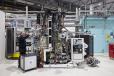
An analysis program for viewing and analysing near-edge X-ray absorption fine-structure (NEXAFS) spectra.