
Science Research Leader and Environmental Scientist


Showing 441 - 460 of 535 results

Be the first to find out the latest news regarding nuclear science and technology products, services, and innovation.
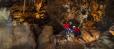
Research is being undertaken through an Australian Research Council Discovery Project "Reconstructing Australia’s fire history from cave stalagmites", led by Professor Andy Baker at UNSW Sydney and Dr. Pauline Treble at ANSTO. The project aims to calibrate the fire-speleothem relationship and develop coupled fire and climate records for the last millennium in southwest Australia.

Role at ANSTO

Dr Peter Kappen manages the Spectroscopy Group at the Australian Synchrotron.
How well do you know the chemical makeup of your product – batch to batch, dose to dose – or even within one pill or capsule?

Work with our scientists to deliver the best possible decommissioning outcome for your organisation.
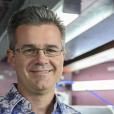
Dr Joseph Bevitt is a senior instrument scientist on the Dingo radiograph/tomography/imaging station, and scientific coordinator for the Australian Centre for Neutron Scattering.

Discover the many career opportunities in the nuclear industry on a special behind the scenes tour of ANSTO.
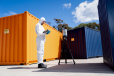
It is critical across many industries to identify and locate sources of radiation accurately and quickly. By accurately imaging radiation across the full energy range, CORIS360™ improves operational decision making across many industry settings.
A collaboration of Australian scientists has used ANSTO’s Australian Synchrotron to measure the amount of carbon that is captured in microscopic seams of deep-sea limestone, which acts as a carbon sink.

ANSTO provides a summary of waste production and consumables for FY2024 - FY2025
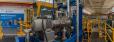
ANSTO Synroc® is constructing an Australian radioactive waste treatment facility for the by-products of Molybdenum-99 (Mo-99) production.

Challenge your understanding of nuclear science and technology with fun secondary school activities, exciting competitions and unique tours of our facilities.