Radioactive waste briefing for Nuclear Medicine Specialists
Seven of Australia’s top nuclear medicine professionals have been briefed on ANSTO’s plans to manage radioactive waste, as well as to support nuclear medicine innovation in Australia.


Showing 441 - 460 of 1414 results
Seven of Australia’s top nuclear medicine professionals have been briefed on ANSTO’s plans to manage radioactive waste, as well as to support nuclear medicine innovation in Australia.
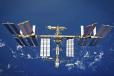
In space, without the protection of the magnetosphere, the type and dose of radiation is considerably different to what is naturally experienced on earth. However, it is the secondary particles of lower energies created when galactic and cosmic radiation interacts with shielding that is of concern for astronauts.
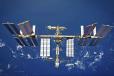
In collaboration with the French National Institute of Health and Medical Research (INSERM) and the French International Space Agency (CNES), ANSTO scientists are undertaking research on the radiobiological effects of secondary particles that are created when radiation interacts with the shielding on the International Space Station.
ANSTO announces the recipients of the 2022 organisational awards

Archive of ANSTO research publications, seminars and short talks.

You are invited to submit to the various awards from ANSTO, User Advisory Committee (UAC) and Australian Neutron Beam User Group (ANBUG).

Australian Nuclear Science and Technology Organisation (ANSTO) is committed to protecting your personal information in accordance with the Privacy Act 1988 (Cth) (Privacy Act) and the Australian Privacy Principles.
Highlights of the Energy Materials Project.
The ANSTO Awards in Nuclear Science and Technology 2018 were presented on Friday 2 November at The Australian Museum, and showcased ANSTO’s unique nuclear science and technology capabilities, which enable progress in the key areas of health research and innovation for industry.
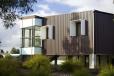
Recommended accommodation and transport information.
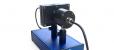
The Centre for Accelerator Science welcomes collaborations with industry for the development of new technologies,
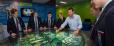
Come and discover the world of nuclear science at ANSTO - book a school tour in Sydney today.
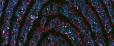
Most fingermark research has largely focussed on the organic material in residues. Consequently, a gap in fundamental knowledge exists when it comes to inorganic components such as metals.
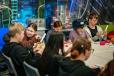
Deaf Youth Science Camp is back for 2026! Deaf Youth Science Camp (DYSC) is a fun 4-day immersive science experience for Deaf/hard-of-hearing young people (aged 12-17 years old). Held at ANSTO at Lucas Heights, Sydney, the camp is a mix of hands-on science activities, outdoor activities and excursions to nearby science centres. Participants will work with Deaf professionals to learn about careers in STEM, develop personal and leadership skills and meet new friends. This camp is hosted by Deaf Youth Australia and ANSTO, and funded by a National Science Week grant.

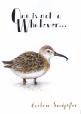
ANSTO is proud to host the Shorebirds Competition for the fourth year. This unique environmental poster competition is free to enter and offers over $4000 in prizes (insert link to prizes button) for students and schools!
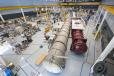
The Australian Centre for Neutron Scattering (ACNS) is a major research facility for neutron science that comprises a suite of neutron instruments with a range of techniques for scientific investigations in physics, chemistry, materials science, medicine and environmental science among other fields.