Man-made fossil emissions larger than previously believed
ANSTO contributes to major study on global warming by measuring methane and carbon monoxide trapped in ice.


Showing 481 - 500 of 521 results
ANSTO contributes to major study on global warming by measuring methane and carbon monoxide trapped in ice.
Collaboration across the Tasman has enabled Australian and New Zealand researchers and scientists to shed light on a protein involved in diseases such as Parkinson’s disease, gastric cancer and melanoma.


Dr Safavi-Naeini is the Acting Leader of the Centre for Accelerator Science. She is a particle physicist and previously had a role as a research leader at the Human Health group.

Mr Michael Quigley is an experienced director, senior business executive and former engineer. He has extensive corporate, financial and governance experience across the public and private sectors.
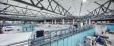
The Australian Synchrotron is a source of powerful X-rays and infrared radiation that can be used for a wide range of scientific and technical purposes. Synchrotron X-rays are millions of times brighter than those produced by conventional X-ray machines in laboratories and hospitals.
ANSTO physicist supports launch of new carbon ion therapy treatment service in Austria.
Collaborative research predicted the distortion and performance of metal parts made by laser deposition.
Researchers use Kitaev theoretical model to explain unusual phenomenon in two-dimensional material.
Project Bright, the construction of eight new beamlines at ANSTO’s Australian Synchrotron has reached a milestone by achieving ‘First Light’ for the new micro-computed tomography (MCT) beamline in late NovembeR.
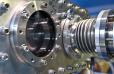
Recoil Time of Flight Spectrometry (RTOF) is used to detect a multitude of elements by separating their masses. unambiguously