

Showing 481 - 500 of 995 results
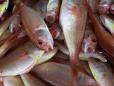
Research to improve food quality and design for better health
We are using nuclear and other methods to improve the traceability of food to ensure safety and security for consumers and industry, optimise the various functions of food and its production and understand the fundamental mechanisms that link some food to an immune response
Big Ideas Forum
Creative ideas are the spark for great innovations: this week students from across Australia got to share their ideas through ANSTO’s Big Ideas Forum.
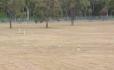
Little forest legacy site
ANSTO is responsible for the Little Forest Legacy Site (LFLS) located within the ANSTO Buffer Zone boundary. This site, formerly known as the Little Forest Burial Ground (LFBG), was used by the Australian Atomic Energy Commission (AAEC) during the 1960’s to dispose of waste containing low levels of radioactivity and beryllium oxide (non-radioactive) in a series of shallow trenches. There has been regular monitoring of the site since 1966 and the results have been reported in ANSTO’s environmental monitoring reports.

Stable production of hydrogen from seawater
Efficient electro-catalysis of hydrogen from seawater represents a low-cost, abundant source of clean energy.
OPAL reactor back online after planned long shutdown
ANSTO’s OPAL multi-purpose research reactor at Lucas Heights has officially returned to power and recommenced operations, following a months-long planned shutdown to carry out essential maintenance and upgrades.
Robotics hub to improve management of Australian infrastructure and assets
ANSTO participation in ARC on Intelligent Robotic Systems for Real-time Asset Management has potential benefit in the management of infrastructure and assets
Radiocarbon dating at ANSTO informs date of oldest known Aboriginal rock art
Radiocarbon dating capabilities at the Centre for Accelerator Science have provided evidence of a 17,300-year old painting of a kangaroo from the Kimberley region.
National Volunteer Week 2014: Part two
Smartcrete on the horizon
Research infrastructure will support research and development of advanced concrete.
Iron and Fire
Using geoarchaeology to reconstruct the history of an ancient Khmer city.
Australia supports Fiji-led IAEA RCA project to strengthen food security
Australia is supporting a new regional initiative led by Fiji in partnership with the International Atomic Energy Agency (IAEA) under the Regional Cooperative Agreement for Research, Development and Training Related to Nuclear Science and Technology for Asia and the Pacific (RCA) to strengthen food security across Asia and the Pacific using nuclear science and technology.
Certificate of appreciation from WA DFES
ANSTO and the Australian Radiation Protection and Nuclear Safety Agency (ARPANSA) have been recognised for their valuable contributions to the search and recovery efforts for a missing 8mm-long radioactive capsule in the Western Australian outback.
Webinar: Strengthening the future of the nuclear workforce
Join us for this online webinar to explore and discuss the huge opportunities in growing a dynamic and impactful future nuclear workforce.
Nuclear tech helps power Perseverance Rover on Mars
A large international research team led by Academia Sinica in Taiwan investigated how heat is transferred in an advanced thermoelectric material made with germanium (Ge) and tellurium (Te) and doped with antimony (Sb). These devices are used to power space probes such as the Mars Curiosity Rover.
ANSTO and University of Wollongong team up to sort sci-fi from sci-fact
Our understanding of the atom powers ANSTO's nuclear and accelerator research techniques
Scientists at ANSTO characterise structures with atomic detail using probes such as x-rays, electrons, neutrons and ions.
Explaining glaciers of solid methane and nitrogen on Pluto
Research reports for the first time how solid methane and nitrogen expand in response to temperature changes and resolves an historic ambiguity relating to the structure of nitrogen.
Nuclear science informing risk assessments during offshore decommissioning
Environmental scientists at ANSTO have been undertaking research to gain a better understanding of the potential impact of contaminants on decommissioned offshore oil and gas infrastructure since 2017
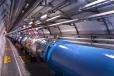
Two Australian science teachers will have the chance to participate in a special two-week summer school at the Large Hadron Collider in July 2026.