
Senior Scientist - XAS
Career Statement and Role at ANSTO


Showing 481 - 500 of 662 results
Career Statement and Role at ANSTO


Insights into the crystallisation process of twin crystals important for drug production.
Progress on a more environmentally-friendly production method for hydrogen peroxide.
In a world-first study, Australian environmental scientists have used cave stalagmites as a record of groundwater replenishment over time, that showed the current level of rainfall recharging groundwater in southwest WA is at its lowest for at least the last 800 years.
Researchers based at Monash University and the Swedish Museum of Natural History have pioneered the use of nuclear imaging techniques at ANSTO’s Centre for Neutron Scattering to resolve long-standing problems in plant evolutionary history linked to wildfires.
Phenomenon predicted by Nobel Prize recipient

ANSTO offers capabilities and expertise for the radiation testing and accreditation of space-based systems.
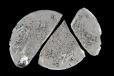
Within the bulk structure of such glasses, boron is known to be a key actor, as it exhibits intriguing and composition-dependent changes in coordination state that often drive properties.
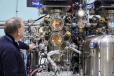
Technical information on the Soft X-ray spectroscopy beamline at the Australian Synchrotron.

International collaboration uses cryo-electron tomography to determine the structure of a complex responsible for sorting and delivering cellular cargo.
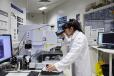
The Infrared Microspectroscopy beamline combines the high brilliance and collimation of the synchrotron beam through a Bruker V80v Fourier Transform Infrared (FTIR) spectrometer and into a Hyperion 3000 IR microscope to reach high signal-to-noise ratios at diffraction limited spatial resolutions between 3-8 μm.
A team of scientists led by Monash University and the University of Melbourne in association with the Peter Doherty Institute for Infection and Immunity have made progress in clarifying the molecular interactions that underpin how our adaptive immune cells recognise SARS CoV-2, which causes COVID-19.
Stable, highly conductive 2D nanosheets of boron nitride promising new material.
International collaboration uses Australian Synchrotron on pioneering malaria research.