Radiocarbon dating and stable isotope analysis contribute to Antarctic research
Study shows for the first time that vegetation in the Windmill Islands, East Antarctica is changing rapidly in response to a drying climate.


Showing 501 - 520 of 775 results
Study shows for the first time that vegetation in the Windmill Islands, East Antarctica is changing rapidly in response to a drying climate.
ANSTO physicist supports launch of new carbon ion therapy treatment service in Austria.
An international team has published research in Nature today that identified the oldest known mummified remains of an exceptionally well-preserved terrestrial vertebrate, a 289-million-year-old reptile Captorhinus.
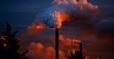
ANSTO has been tracking and publishing data on fine particle pollution from key sites around Australia, and internationally, for more than 20 years.
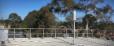
ANSTO continually monitors environmental gamma radiation from a station located in Engadine NSW. ANSTO uses environmental radiation data to evaluate atmospheric dispersion from its site. This radiation is almost completely natural background radiation.
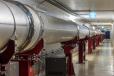
The Imaging and Medical beamline (IMBL) is a flagship beamline of the Australian Synchrotron built with considerable support from the NHMRC. It is one of only a few of its type, and delivers the world’s widest synchrotron x-ray ‘beam’.
ANSTO is committed to providing products that meet or exceed the requirements and expectations of our customers and stakeholders in compliance with all relevant national and international standards, statutory and regulatory requirements.
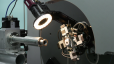
ANSTO provides the Australian and international community with services that improve human health, support industry and protect the environment.
How expensive and time consuming are your tests for optimising your catalyst?
ANSTO concluded an eventful National Science Week with a series of events celebrating how nuclear science and technology contributes to knowledge and progress.
Cracking the code for crop nutrition and food quality with X-ray fluorescence microscopy.
The outcome could have significant implications for better monitoring, management and remedial action of groundwater globally.
Research elucidates how in situ cosmogenic radiocarbon is produced, retained and lost in the top layer of compacting snow (the ‘firn layer’) and the shallow ice below at an ice accumulation site in Greenland.
Research on the mechanism of cell death has insights to bring progress on neurodegenerative diseases and plant biosecurity.
Quantum theory explains the strange and unpredictable behaviour of subatomic particles and the smallest amounts of energy.
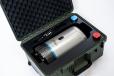
View these case studies for a more detailed look at industry challenges and how CORIS360® radiation imaging technology is improving operational decision making and keeping workers safe.