Structural studies of silk
New infrared imaging technique reveals molecular orientation of proteins in silk fibres


Showing 501 - 520 of 535 results
New infrared imaging technique reveals molecular orientation of proteins in silk fibres
An international collaboration led by The University of Sydney and supported by ANSTO has developed an advanced, innovative artificial intelligence application that could be used to help examine tissue samples and identify signs of disease/
Two startups supported by the nandin Innovation Centre at ANSTO have hit the ground running in 2021 securing major opportunities from state governments to see their businesses thrive.
International research led by Curtin University and supported by ANSTO, has identified and studied the first sauropod dinosaur gut contents found anywhere in the world. The stomach content was preserved with a reasonably complete skeleton of the Australian Cretaceous species Diamantinasaurus matildae found in Winton Queensland.
3D models of multilayered structures on engineering scale from nanoscale damage profiles.
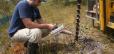


Study shows for the first time that vegetation in the Windmill Islands, East Antarctica is changing rapidly in response to a drying climate.
Innovative medical device Rhenium-SCT® therapy for non-melanoma skin cancer is now available in Australia
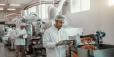
Research can improve both food processing and food product development.
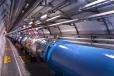

The Australian Government’s nuclear agency, ANSTO, together with NSW Police and multiple state and federal authorities, has completed an operation to repatriate radioactive waste from the UK.

The International Synchrotron Access Program (ISAP) is administered by the Australian Synchrotron and is designed to assist Australian-based synchrotron users to access overseas synchrotron related facilities.
An investigation that set out to resolve some of the uncertainty in the sources and quantities of pollutants reaching Antarctica has produced a new experimental technique to identify and characterise recently terrestrially-influenced air reaching Antarctica.
Collaborative research predicted the distortion and performance of metal parts made by laser deposition.