

Showing 561 - 580 of 673 results
Key mechanism in immune response to virus identified
Dark matter lab funded
ANSTO to ensure ultra-low radiation environment in newly-funded Stawell Underground Physics Laboratory.
Australia charges ahead with new Lithium Technology
Scientists at ANSTO together with Lithium Australia Limited (LIT) have developed a world-first technology to extract more lithium from lithium mining waste, in a game-changer for Australian lithium industry.
Research supports potential local supply chain for component in COVID PCR test
University of Melbourne researchers have investigated a method to produce magnetic nanoparticles in Australia for use in COVID-19 PCR tests.
Earthquake clues unearthed in strange, precariously balanced rocks
Imperial College London researchers tapped into ancient geological data locked within precariously balanced rocks using a new technique to boost the precision of hazard estimates for large earthquakes.
Nuclear techniques help unlock structure
Research on a rare type of superconducting intermetallic alloy
Structure of molecules on nanoparticles characterised
Powerful combination of deuteration and neutron scattering used to characterise structure of molecules on surface of nanoparticles.
Producing superconductors for quantum circuit elements at high temperatures

Radioanalytical Facility
ANSTO’s radioanalytical facilities are recognised internationally and have extensive experience in the measurement of radioactivity from a wide variety of matrices. Our primary radoianalytical techniques include gamma spectrometry and alpha spectrometry.
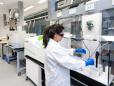
Analytical Facility
ANSTO Analytical Facility conducts a range of analyses required to support our commercial projects, and can analyse everything from simple samples to complex matrices not typically dealt with by standard commercial laboratories.
Assessing the impacts of plastics in our oceans and seas
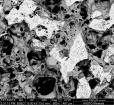
Mineralogy Facility
Our dedicated mineralogists provide specialised knowledge on the mineralogy of ores/concentrates and the wide variety of solids and residues typically generated in hydromet processes. We have well-equipped facilities that can handle a diverse range of samples, particularly those containing elevated concentrations of uranium and thorium.
New molecule puts scientists a step closer to understanding hydrogen storage
Australian and Taiwanese scientists have discovered a new molecule which puts the science community one step closer to solving one of the barriers to development of cleaner, greener hydrogen fuel-cells as a viable power source for cars.
ANSTO joins new industrial transformation centre for bioactive ingredients
ANSTO will be participating in a new Industrial Transformation Training Centre established and funded by the Australia Research Council to advance the use of bioactive ingredients in Australia.
Research investigates low activation and low cost superconducting material for magnetic coils in next generation fusion reactors
Fission vs fusion: an explainer
The release of the Oppenheimer film, the story of the director of the Manhattan Project, has prompted many people to go online and search for an explanation of the difference between fission and fusion, two fundamental scientific concepts.
Neutron scattering scientists recognised by their peers
Nuclear technique reveals 'stone age'
Understanding pollutants impact
Research highlights how biodistribution of a toxic substance essential to understand all exposure risks.