

Showing 61 - 80 of 88 results
Pioneering collaboration advances nuclear medicine
This joint initiative at ANSTO has developed a new capability: solid surface radiolabelling to evaluate Auger emitting sources for next-generation targeted therapy.
OPAL reactor back online after planned long shutdown
ANSTO’s OPAL multi-purpose research reactor at Lucas Heights has officially returned to power and recommenced operations, following a months-long planned shutdown to carry out essential maintenance and upgrades.
Progress on dark matter lab
Moving earth in the search for dark matter: laboratory construction underway at mine site.
Dynamic real-time video captures how surfaces are modified by nuclear techniques
Collaborative research brings new insights into radioactive waste, nuclear fuel and nuclear waste forms
ANSTO researchers have demonstrated longstanding expertise in the study of nuclear fuel and radioactive waste with two recent journal articles in a special issue of Frontiers of Chemistry.

Bilby - Small Angle Neutron Scattering
The instrument is very well suited for the study of kinetic effects, like relaxation following a chemical reaction, or external impulses like mechanical deformation, an electric or magnetic field.
Australia's radioactivity measurement centre officially opened
Insights into Titan’s atmosphere
Terahertz/Far Infrared beamlines assisted investigation into possible composition of lower atmosphere of Saturn's moon Titan.
ANSTO to undertake routine shipment of spent fuel in 2025
Collaboration to jolt energy research forward
New imaging approach using live plants will benefit agriculture and environment
A cross-disciplinary team has used laboratory-based and synchrotron-based infrared spectroscopy imaging techniques to monitor the waxy surface of living plant leaves in real-time to gain insights into plant physiology in response to disease, biological changes or environmental stress.
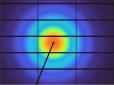
Biological small angle X-ray scattering beamline (BioSAXS)
The Biological Small Angle X-ray Scattering beamline will be optimised for measuring small angle scattering of surfactants, nanoparticles, polymers, lipids, proteins and other biological macromolecules in solution. BioSAXS combines combine a state-of-the-art high-flux small angle scattering beamline with specialised in-line protein purification and preparation techniques for high-throughput protein analysis.

Understanding the full impact of radiation on astronauts
In space, without the protection of the magnetosphere, the type and dose of radiation is considerably different to what is naturally experienced on earth. However, it is the secondary particles of lower energies created when galactic and cosmic radiation interacts with shielding that is of concern for astronauts.

Understanding the full impact of radiation on astronauts
In collaboration with the French National Institute of Health and Medical Research (INSERM) and the French International Space Agency (CNES), ANSTO scientists are undertaking research on the radiobiological effects of secondary particles that are created when radiation interacts with the shielding on the International Space Station.
ANSTO scientists would have preferred more about the physics but impressed with Oppenheimer
In part 1 of this two-part series, ANSTO scientists from across the organisation became film critics to review Christopher Nolan’s new movie, Oppenheimer, which explores the life of the director of the Manhattan Project to develop an atomic weapon.
Taiwan science organisations and ANSTO celebrating ten years of operation of an advanced instrument
A delegation of Taiwanese officials and ANSTO staff celebrated the 10th anniversary of the operation of an advanced scientific instrument, a cold neutron triple axis spectrometer Sika on 4 September.
Quantum sensing exploits the most counterintuitive properties of quantum systems
Devices that use quantum sensors take advantage of quantum properties, unlike conventional instruments that apply classical physics in their operation.
Innovation forum will benefit graduates and Australian industry
The first National Graduate Innovation Forum will be held in November to connect PhD students with representatives from four of Australia’s leading industries to apply scientific thinking to current real-world challenges.
Statement of Intent
In January 2026, Mr Michael Quigley AM, ANSTO Board Chair, shared ANSTO's Statement of Intent with the Minister for Industry and Innovation, and Minister for Science.