

Showing 61 - 80 of 128 results
Statement of Intent
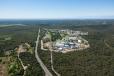
In January 2026, Mr Michael Quigley AM, ANSTO Board Chair, shared ANSTO's Statement of Intent with the Minister for Industry and Innovation, and Minister for Science.

Community FAQs
Frequently asked questions about ANSTO for the community.
Repatriation of Australian waste from France
Funding backs ANSTO‑led program to develop new treatment for deadly brain cancers
ANSTO has secured a $1.62 million Medical Research Future Fund (MRFF) grant under the Australian Brain Cancer Mission’s 2024 Brain Cancer Discovery and Translation program
OPAL reactor back in business

Nuclear Reaction Analysis
Nuclear Reaction Analysis (NRA) detects charged particles and is used predominantly to determine concentrations and depth profiles of the lighter elements.
Australia and IAEA partnership launches new radiation oncology project to improve cancer patient outcomes in Asia and Pacific region
Australia launched a new international development project in partnership with the International Atomic Energy Agency (IAEA) to advance ‘Rays of Hope’ in the Asia and Pacific region.
Celebrating ANSTO and 70 years of Australia’s home-grown nuclear expertise
In 2023 we’re celebrating the 70th Anniversary since Australia began developing our nation’s Australia’s nuclear capabilities.
WA outback proves no match for Aussie nuclear know-how
A dedicated team of radiation specialists from the Australian Nuclear Science and Technology Organisation (ANSTO) are behind the successful detection and rapid retrieval of a missing radioactive source in outback Western Australia.
Understanding radiation damage at the atomic scale
Nuclear techniques reveal 'stone age': dating kidney stones

Data sets
Your students can analyse real research data from ANSTO scientists.
End of an era for Australia’s first nuclear reactor
Nuclear techniques confirm unique biology of human eye lens
Insights from collaborative research may lead to improvements in the production of carbon fibres
High-energy Heavy Ion Microbeam
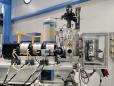
The high-energy heavy-ion microprobe is used for the characterisation or modification of material properties at depths from approximately 1 micrometre to maximum depths of up to 500 micrometres from the material surface.
Bringing radiochemistry to life
Advanced reactor research: Student opportunity
ANSTO is interested finding students to collaborate on Generation IV reactor systems.