Sustained contribution ANSTO Award to Prof Henk Heijnis
Environmental scientist with a passion for fieldwork and a lifelong commitment to scientific excellence


Showing 61 - 80 of 138 results
Environmental scientist with a passion for fieldwork and a lifelong commitment to scientific excellence

ANSTO is a highly regulated organisation. Our governance system and processes provide critical guidance to effectively manage ANSTO’s activities. This section outlines the processes and systems that are in place to provide assurance to Government, our stakeholders and the community that we are working within our regulated and mandated requirements.
Clarity Pharmaceuticals is building on comprehensive work on chelators carried out at ANSTO.

The International Synchrotron Access Program (ISAP) is administered by the Australian Synchrotron and is designed to assist Australian-based synchrotron users to access overseas synchrotron related facilities.
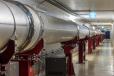
The Imaging and Medical beamline (IMBL) is a flagship beamline of the Australian Synchrotron built with considerable support from the NHMRC. It is one of only a few of its type, and delivers the world’s widest synchrotron x-ray ‘beam’.

A high-level strategy for ANSTO to support environmental sustainability
Outstanding individuals and teams have been recognised for their outstanding work, innovation, excellence in the 2025 ANSTO Awards.

The Detection & Imaging group builds on ANSTO’s 70-year history of scientific achievements and contributions in meeting the nuclear needs of industry, globally.

Australia and Sri Lanks signs new partnership to fight chronic kidney disease.

Over the last decades, neutron, photon, and ion beams have been established as an innovative and attractive investigative approach to characterise cultural-heritage materials.
ANSTO’s OPAL multi-purpose research reactor at Lucas Heights has officially returned to power and recommenced operations, following a months-long planned shutdown to carry out essential maintenance and upgrades.

The new facility will be built around a product line of ANSTO’s design – a new Technetium-99m generator – that will enable greater process automation than is possible with existing technology, leading to improvements in efficiency, quality and importantly the highest levels of production safety.
Science and medical experts meet in Adelaide to discuss great potential of particle therapy in Australia
In part 1 of this two-part series, ANSTO scientists from across the organisation became film critics to review Christopher Nolan’s new movie, Oppenheimer, which explores the life of the director of the Manhattan Project to develop an atomic weapon.
The Nobel Prizes for Physics, Chemistry and Medicine have been announced.