

Showing 641 - 660 of 1658 results
Diamond for biological sensing applications
Nitrogen-doped ultrananocrystalline diamond (N-UNCD) is a promising material for future biological and electrochemical applications.
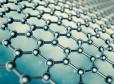
Scalable graphene growth on a semiconductor
The growth and incorporation of graphene into semiconductor device architectures has been limited by challenges related to the quality, reproducibility, and high process temperatures required to grow it on suitable substrates.

Stable production of hydrogen from seawater
Efficient electro-catalysis of hydrogen from seawater represents a low-cost, abundant source of clean energy.

Revolutionizing Li-S Battery for Energy Storage with Metal–Organic Framework Materials
Investigations of food authenticity
Use of nuclear techniques to benefit industry and consumers
Beamline Proposal & Experiment Guide
Guide to successful proposals and experiments at the Powder Diffraction beamline.
‘Atomic chicken-wire’ is key to faster DNA sequencing
An unusual and very exciting form of carbon - that can be created by drawing on paper - looks to hold the key to real-time, high throughput DNA sequencing, a technique that would revolutionise medical research and testing.
Australian grads defy exodus for chance to work in science
Australian planetary scientists congratulate NASA after Juno enters Jupiter's orbit
International experts looking at the nuclear power technologies for the future met in Sydney
ANSTO hosted an international meeting of Expert and Policy group members for Generation IV Forum (GIF).
Agreement to bolster Australian French scientific collaboration with SAAFE scholarship program
Evidence of spin nematic
Evidence for existence of a highly exotic and elusive state of matter, known as a magnetic ‘spin nematic’ phase in a natural mineral called linarite.
Progress on understanding what makes COVID-19 more infectious than SARS
Researchers led by the University of Bristol (UK) have identified a possible cause of SARS-CoV-2’s increased infectivity compared to SARS-CoV
ANSTO and University of Wollongong collaborate on new quality control device to enhance precision in advanced cancer treatment
Researchers from the Health Research and Technology Group at ANSTO and the University of Wollongong have developed a new device that could improve the quality control of accelerator-based boron neutron capture therapy, a promising radiation therapy for treating aggressive cancers.
Eureka finalist
Two ANSTO scientists were part of a research team led by the University of Wollongong, who are finalists for the 2019 NSW Environment, Energy and Science (DPIE) Eureka Prize for Environmental Research.
Restoring soil carbon
Restoring soil carbon can bring benefits for agricultural productivity and climate change mitigation.
Introducing a novel molecular orbital interaction that stabilises cathode materials for lithium-ion batteries
A large international team led by scientists from the Institute for Superconducting and Electronic Materials at the University of Wollongong has verified that the introduction of novel molecular orbital interactions can improve the structural stability of cathode materials for lithium-ion batteries.
Pass the salt: can sodium power the 21st century
Atomic structure of new cathode material for sodium ion batteries helps explain long life
Lecture on fusion energy
Inaugural speaker returns to deliver lecture on progress of the world largest engineering project to create fusion energy