Group Executive Nuclear Science and Technology
Andrew Peele was appointed Group Executive for ANSTO Nuclear Science and Technology in July 2021 and was Director of the Australian Synchrotron from 2013 -2021. He is an adjunct Professor of Physics at La Trobe University.
Distinguished Research Scientist
Role at ANSTO

Instrument Scientist BILBY (SANS)/Small Angle Scattering Group Manager
Role at ANSTO
In a new study published in Nature Communications, researchers from UNSW have demonstrated a more sustainable alternative: an electrochemical pathway that couples carbon dioxide and nitrogen-containing species to produce urea under mild conditions.
Principal Scientist - SAXS/WAXS
Role at ANSTO:

Stable Isotope Analyst
Role at ANSTO
Stable isotopes are high useful in investigations of environmental samples.
The Australian Government recently signed a landmark emissions reduction technology deal with Great Britain, which includes nuclear energy and clean hydrogen among the six key low emission technologies the two countries hope to advance.
With the screening of the popular HBO series about Chernobyl, we asked our Nuclear Analysis team for their insights on key differences between the reactor in the TV series, a Generation II RBMK power reactor and ANSTO’s state of the art research reactor OPAL.
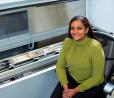
Science Research Leader and Instrument Scientist
Role at ANSTO
The Australian Synchrotron is a source of powerful X-rays and infrared radiation that can be used for a wide range of scientific and technical purposes. Synchrotron X-rays are millions of times brighter than those produced by conventional X-ray machines in laboratories and hospitals.
Sample environments, Data analysis, SpICE and SICS

Graduate Engineer at ANSTO
Having completed an undergraduate degree in Mechanical and Manufacturing Engineering/Materials Science at UNSW, I’m currently working at ANSTO as part of the Graduate Development Program.
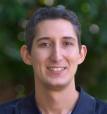
Radioactive Facilities Manager & Indigenous Outreach Committee Chair - ANSTO
Dale Codling leads a team at ANSTO that is responsible for the operation, maintenance, and security of research facilities capable of handling nuclear and radioactive materials.
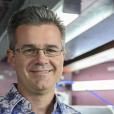
Senior Instrument Scientist, Dingo
Role at ANSTO
Dr Joseph Bevitt is a senior instrument scientist on the Dingo radiograph/tomography/imaging station, and scientific coordinator for the Australian Centre for Neutron Scattering.

Consultant Health Physicist
Giulio Ruiu (also known as Julian) brings over a decade of specialised experience in radiation safety, with a strong focus and passion for radiation protection and the practical application of safety principles.
The Nobel Prizes for Physics, Chemistry and Medicine have been announced.
On average, there is now 17 per cent less rainfall across Western Australia’s south-western region than was recorded prior to 1970. This rainfall reduction has economic, social and environmental implications for the region, in particular for the growing capital of Perth, as well as water-dependent industries in the state.
Mathematical insights explain inconsistencies in experimental data: pyrochlore transformation into defect fluorite or not?
Pagination