Potential immunotherapy strategy for HIV
A “super” receptor that helps kill HIV infected cells identified.


Showing 681 - 700 of 2005 results
A “super” receptor that helps kill HIV infected cells identified.
A new nuclear medicine waste processing facility that showcases ANSTO Synroc technology is under construction.
Twenty-four participants from Asia and the Pacific travelled to ANSTO for an International Atomic Energy Agency Regional Training Course on ‘Production and preclinical evaluation of emerging cyclotron-based radiopharmaceuticals’
The complex engineering of scientific instruments is explored in this 'behind the scenes' look at the installation of frontends for two new beamlines at the Australian Synchrotron.
Moving earth in the search for dark matter: laboratory construction underway at mine site.
Recent catastrophic Australian bushfires produced extremely high levels of fine particle pollution.
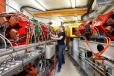
The Accelerator Science group purse a broad research program with the aims of improving the performance and reliability of our accelerators, increasing their research capabilities and developing the next generation of accelerator technology.
In early February, ANSTO was honoured to host the International Atomic Energy Agency (IAEA) National Liaison Officers Meeting and Sub Regional Approach to the Pacific Islands (SAPI) Programme, which focused on the development and delivery of the IAEA Technical Cooperation Programme in the Pacific.
The first experimental evidence to validate a newly published universal law that provides insights into the complex energy states for liquids has been found using an advanced nuclear technique at ANSTO.

Jack the Super Prawn lives in the Barrier Reef and uses his powers to protect the environment. With JackVac, he cleans up rubbish and impurities in seawater. With JackCopter, he soars high into the air, where you wouldn't normally see a prawn. Of course, powers like that help Jack find and clear up waste plastic. But Jack's main job is to educate young readers.

Health researchers at ANSTO use world-class nuclear and isotopic techniques to undertake research and development activities to address some of the most challenging health problems.
ANSTO recognises the traditional indigenous owners of the land at all its sites and works to contribute to the recognition of the indigenous cultural heritage of Australia.
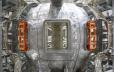
ANSTO signed a cooperation agreement with ITER to enable Australia to engage with and benefit from participation in the world’s largest engineering project to create fusion energy.
Unique opportunity to contribute to the long term conservation of Australia’s most iconic landmark: The Sydney Harbour Bridge.