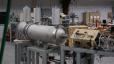
Micro-Particle Induced X-ray Emission
Micro-Particle Induced X-ray Emission (µPIXE) is used to construct elemental maps that show variations of an element's concentration across the sample surface.


Showing 721 - 740 of 1603 results
Micro-Particle Induced X-ray Emission (µPIXE) is used to construct elemental maps that show variations of an element's concentration across the sample surface.

Freely Accessible Remote Laboratories (FarLabs) have developed a nuclear remote online laboratory that schools can use to perform experiments with nuclear radiation. Two experiments allow students to investigate the penetrating power of different forms of radiation and how the amount of radiation decreases with distance.
The FarLabs project is led by the Department of Physics at La Trobe University in collaboration with James Cook University, Curtin University, Quantum Victoria, V3 Alliance, and ANSTO.
Scientists at ANSTO together with Lithium Australia Limited (LIT) have developed a world-first technology to extract more lithium from lithium mining waste, in a game-changer for Australian lithium industry.
ANSTO scientists will contribute to a new $1 million ARC Linkage Project grant to evaluate human responses to post glacial sea level rise at Red Lily, Arnhem land led by Griffith University.
Defence Materials Technology Centre honours achievements of two ANSTO collaborators.
Dr Anna Paradowska has been appointed as a Conjoint Professor of Practice in Advanced Structural Materials at the University of Sydney.
A large international research team led by Academia Sinica in Taiwan investigated how heat is transferred in an advanced thermoelectric material made with germanium (Ge) and tellurium (Te) and doped with antimony (Sb). These devices are used to power space probes such as the Mars Curiosity Rover.

Frequently Asked Questions on the Macromolecular Crystallography beamlines (MX1 and MX2)