
User Meeting 2020 Invited Speakers
The User Advisory Committee (UAC) are pleased to present this year's invited speakers.


Showing 81 - 100 of 331 results
The User Advisory Committee (UAC) are pleased to present this year's invited speakers.
A unique scientific capability comprising a single research platform for high-fidelity simulation, real-time dosimetry, and biological response data is available all from a neutron instrument.
A research team from ETH Zurich developing and characterizing silicon carbide devices for power electronics, recently spent time at ANSTO’s Centre for Accelerator Science to use a specialised beamline in their investigations.
Australia is leading an agriculture project in the Asia and Pacific region, in partnership with the International Atomic Energy Agency (IAEA) and the Regional Cooperative Agreement for Research, Development and Training Related to Nuclear Science and Technology for Asia and the Pacific (RCA) to progress Atoms4Food.
Australia launched a new international development project in partnership with the International Atomic Energy Agency (IAEA) to advance ‘Rays of Hope’ in the Asia and Pacific region.

New international limits on the cadmium content of cacao products have spurred research to discover how cadmium accumulates in cacao beans, and the effects of processing.
A pioneering study led by Professor Junpei Yamanaka of Nagoya City University and an international team that included ANSTO has delivered transformative insights into the behaviour of colloidal particles under microgravity.
Testing at ANSTO’s Centre for Accelerator Science supports an action plan just published by the Australian Packaging Covenant Organisation (APCO) to phase out per- and polyfluoroalkyl substances (PFAS) in fibre-based food contact packaging in Australia by December 2023.
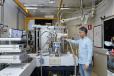
The THz/Far-IR Beamline couples the high brightness and collimation of a bend-magnet synchrotron radiation to a Bruker IFS125HR spectrometer providing high-resolution spectra (0.00096 cm-1) with signal to noise ratio superior to that of thermal sources up to 1350 cm-1 for gas-phase applications; the beamline also delivers signal to noise ratio superior to that of thermal sources up to 350 cm-1 for condensed phase samples.


International study has revealed a clustering of charged particles in the microgravity environment of space,with implications for the development of materials and better drugs that depend on the mixing of two or more charged particles.
An international research team has discovered how a bacterial toxin, known as Ssp, is capable of entering and killing a wide range of living cells, including human cells using the Australian Synchrotron.
ANSTO has contributed to research that indicated that Aboriginal people had a broad diet and intensive plant processing technologies, allowing them to respond to changes in climate, sea level and vegetation over the last ca. 65,000 years.
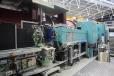
A neutron reflectometer for vertical samples.
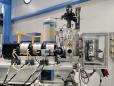
The high-energy heavy-ion microprobe is used for the characterisation or modification of material properties at depths from approximately 1 micrometre to maximum depths of up to 500 micrometres from the material surface.
With world-class experts in groundwater and major contributions in this area over two decades, ANSTO completed a major project report on Improving groundwater sustainability and renewability using isotope hydrochemistry in NSW for the Department of Planning and Environment (NSW) and National Water Grid earlier in the year.