Interactions of nanoplastics
Exploring the interaction of polystyrene nanoplastics and blood plasma proteins.


Showing 81 - 100 of 114 results
Exploring the interaction of polystyrene nanoplastics and blood plasma proteins.

The Infrared microspectroscopy microscopes can record spectra from a range of different samples; from thin microtomed sections to polished blocks and embedded particles. This section highlights the types of samples that can be analysed using the IRM beamline
The outcome could have significant implications for better monitoring, management and remedial action of groundwater globally.

The Centre for Acclerator Science operates accelerators that can be used for space radiation testing.
The first National Graduate Innovation Forum will be held in November to connect PhD students with representatives from four of Australia’s leading industries to apply scientific thinking to current real-world challenges.
ANSTO has hosted its second IAEA Practical Introduction to Nuclear Forensics Regional Training Course for representatives of member countries from South-East Asia, sharing expertise on the theoretical and practical aspects of nuclear forensics to respond to incidents of nuclear or other radioactive material out of regulatory control.

The National Deuteration Facility offers access to deuterated molecules prepared by both in vivo biodeuteration and chemical deuteration techniques.
ANSTO shared expertise on next-generation reactors and nuclear power with sustainable energy experts at the Australian Academy of Science symposium in May.
A delegation of Taiwanese officials and ANSTO staff celebrated the 10th anniversary of the operation of an advanced scientific instrument, a cold neutron triple axis spectrometer Sika on 4 September.
International interest is building in Australia’s new multi-million-dollar radioactive waste processing facility at the Sydney campus of the Australian Nuclear Science and Technology Organisation (ANSTO).
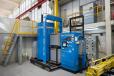
Hot Isostatic Pressing supports advanced manufacturing by increasing a material's density and reducing porosity. This capability complements ANSTO’s extensive suite of instruments and techniques for characterising materials and final products.
ANSTO has hosted for the third time the International Atomic Energy Agency’s (IAEA) Practical Introduction to Nuclear Forensics Regional Training Course.

ANSTO and the University of Wollongong are jointly operating a unique laboratory able to extract carbon-14 (radiocarbon) atoms out of a rock that is attracting global interest as a new tool to better understand recent changes in Earth’s climate system and rates of landscape change over the past 20, 000 years.