
Privacy Policy
Australian Nuclear Science and Technology Organisation (ANSTO) is committed to protecting your personal information in accordance with the Privacy Act 1988 (Cth) (Privacy Act) and the Australian Privacy Principles.


Showing 81 - 100 of 210 results
Australian Nuclear Science and Technology Organisation (ANSTO) is committed to protecting your personal information in accordance with the Privacy Act 1988 (Cth) (Privacy Act) and the Australian Privacy Principles.
With a well-established portfolio of nuclear research and the operation of Australia's only nuclear reactor OPAL, ANSTO scientists conduct both fundamental and applied research on fuel for current, advanced, and future nuclear technology systems.
Participants undertook IAEA training hosted by Macquarie University and ANSTO on use of radionuclides for soil and water investigations.


A new imaging technology developed at ANSTO makes it possible to image, identify and locate gamma-ray radiation in a safe and timely manner.
Contributing to research that strengthens the defence of Australia
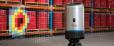
Overlaying a 360° x 90° radiation image onto a panoramic optical image of the scene, makes interpretation much easier. The spectroscopic detector at the heart of the imager enables the accurate visualisation and identification of sources across a broad energy range.
The University of Newcastle and UNSW [GW1] are using advanced neutron scattering techniques at ANSTO to carry out research on the structure of polymers in complex salt environments that will ultimately provide a way to predict their behaviour for real-world applications.
A new imaging technology developed at ANSTO makes it possible to image, identify and locate gamma-ray radiation in a safe and timely manner.
ANSTO is celebrating the official opening of HIFAR, Australia’s first nuclear reactor, sixty-five years ago.
Virtual activities celebrating the benefits of nuclear science and technology held for National Science Week
The Australian led regional cancer care project in medical physics held its first regional training course in Malaysia to progress Rays of Hope.

The National Deuteration Facility is providing deuterated cholesterol, an essential ingredient in lipid nanoparticles for the delivery of vaccines using mRNA, to academic and industry partners.

In Australia and the Southeast Asia basin, the ANSTO facility offers a wide range of unique nuclear-beam techniques for cultural heritage research.
ANSTO is a partner on the National Space Qualification Network (NSQN) led by the Australian National University (ANU) that will transform Australia into a world-leading space centre by enhancing facilities to test payloads, components, and hardware prior to their use in harsh environments of space.