

Showing 81 - 100 of 138 results
Pioneering research has confirmed that the current level of rainfall recharging groundwater in southwest WA is at its lowest for at least the last 800 years
In a world-first study, Australian environmental scientists have used cave stalagmites as a record of groundwater replenishment over time, that showed the current level of rainfall recharging groundwater in southwest WA is at its lowest for at least the last 800 years.
Advanced refrigeration technology on the horizon
Atomic mechanism produces colossal cooling effect in new class of materials .
Dire statistics for seabirds in latest plastics research
New Australian led patient-care project in the Asia and Pacific region launched in partnership with the IAEA
The IAEA is providing $1.3m over four years to implement a new, Australian-led patient-care project for the Asia and Pacific region
Funding awarded to highlight leadership opportunities for women in STEM fields
Transistors and NASA's radiation paradox: strength in detection, weakness in space operations
The nature of Metal-Oxide-Semiconductor Field Effect Transistors (MOSFETs) present a fascinating paradox in space exploration. Their strength in radiation detection becomes their weakness in space operations, exposing an Achilles' heel for NASA. Yet, these same devices monitor radiation doses received by humans on earth and in space.
ANSTO recognises the contribution of staff for outstanding work, innovation, and excellence
ANSTO announces the recipients of the 2022 organisational awards
Australia’s nuclear science capabilities have been central to our fight against COVID-19
ANSTO scientists share approach on the global stage at the IAEA General Conference.
Two lectures from distinguished physicist
Dr Catalina Curceanu will explore exotic atoms and impossible phenomena in the universe.
ANSTO environmental scientists highlight need to monitor legacy nuclear fallout in Antarctica
ANSTO environmental scientists have alerted the scientific community of the critical need to monitor changes to ice containing potential nuclear fallout that reached Antarctica from 20th century atmospheric weapons testing.
Thirty papers on program at environment conference
Celebrating NAIDOC week
ANSTO proudly contributes to measures that recognise all aspects of Aboriginal and Torres Strait Islander culture and heritage during NAIDOC Week and all year.
X-ray technique used in research on early life forms
Singapore researchers publish findings of link between proteins of archaea and eukaryotes despite being separated by more than 2 billion years of evolution.
NSW report on health effects of bushfires and drought references greater role for ANSTO
The health impacts of exposure to poor levels of air quality resulting from bushfires and drought recommended that NSW Government work with ANSTO to expand the sampling of particulate matter in the air state-wide.
An innovative way to deliver drugs using nanocrystals shows potential benefits
Monash University researchers have used advanced techniques at ANSTO to investigate the production of new, elongated polymer nanocapsules with a high payload of drug nanocrystals to potentially increase drug targetability, and also decrease dosage frequency and side effects.
Nuclear research and medicine in spotlight at NSW Parliament event
Tuning thermomechanical properties
Wombat used in study that showed tuneable thermal expansion by controlled gas sorption.
Understanding corrosion in concrete sewer pipes
Using neutron imaging techniques at ANSTO, researchers from Macquarie University have gained a better understanding of how corrosion forms and spreads through concrete that is commonly used in sewer pipes.
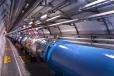
Two Australian science teachers will have the chance to participate in a special two-week summer school at the Large Hadron Collider in July 2026.