Outstanding individuals recognised in ANSTO Awards
Outstanding individuals and teams have been recognised for their outstanding work, innovation, excellence in the 2025 ANSTO Awards.


Showing 801 - 820 of 1226 results
Outstanding individuals and teams have been recognised for their outstanding work, innovation, excellence in the 2025 ANSTO Awards.

ANSTO continually collects meteorological data from its 50-metre tower. A summary of ANSTO's climate statistics including temperature, wind speed and direction, relative humidity, atmospheric pressure and rainfall recorded at this location are provided below.
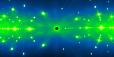
Sample environments, Data analysis and reduction on the Koala instrument.
Padstow North and Caringbah North selected as winners of ANSTO's Top Coder competition.
International researchers have used nuclear techniques at ANSTO - a centre for food materials science - to develop a methodology that could assist in the design of oleogel systems for food applications.

ANSTO has been tracking and publishing data on fine particle pollution from key sites around Australia, and internationally, for more than 20 years.
ANSTO hosted an international training workshop on Pacific isotope hydrology at its Lucas Heights facility in Sydney from 16 - 20 March 2026, bringing together experts and water resource practitioners from across the Pacific and partner organisations.
A number of sophisticated non-invasive nuclear and accelerator techniques were used to provide information about the origin and age of an Australian Aboriginal knife held in the collection of the Powerhouse Museum.
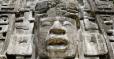
Particle induced X-ray emission can be used for quantitative analysis in archaeology, geology, biology, materials science and environmental pollution.
Scientists from Monash, ANSTo and China have developed an ultra-thin membrane that could separate harmful ions from water or capture gases.
Insights into the formation of deep river canyons mountain ranges in intra-tectonic plate areas by SAAFE Scholarship recipient and collaborators.
ANSTO health researchers have contributed to an international study published in Nature Neuroscience that sheds light on the mechanism by which anti-anxiety drugs act on the brain which could lead to cognitive impairment in vulnerable individuals.

You are invited to submit to the various awards from ANSTO and the User Meeting 2025 organising committee.
ANSTO has installed a radon detector for Curtin University in Burrup WA as part of the Murujuga Rock Art Monitoring Program
PNG researcher provides a progress update on an aquaculture project to improve the industry and benefit the local population

Awards and prizes granted at the User Meeting 2020 for scientists.
ANSTO’s Australian Synchrotron has been working on an initiative that could substantially improve radiotherapy treatment for cancer patients.