

Showing 841 - 860 of 1371 results

ANSTO Event Code of Conduct
Tuning thermomechanical properties
Wombat used in study that showed tuneable thermal expansion by controlled gas sorption.

Neutron Activation Scientist
Role at ANSTO
Space research collaboration
ANSTO launches new area of space research in collaboration with the National Centre for Space Studies and the National Institute of Health and Medical research in France.
Glacial study grant includes ANSTO
ANSTO’s unique capabilities in cosmogenic nuclides included in glacial study grant.

Masters of Design - Swinburne University Fintech Firms
Prarthan is a Fun Loving, Innovation Enthusiast, Design Thinker & Leisure Photographer. He has always been engaged towards generating value, connecting to people globally learning new methods, approaches and learning through experimenting.

Head of Safety
Hock Ch'ng's primary responsibilities involve the formulation, development and implementation of strategies, programs, policies and procedures as creative solutions to complex business concerns involving technical, occupational health and safety (OHS),
New radiocarbon calibration curves for a better dating method
The technique of using radiocarbon to establish the age of artefacts and other samples as well as to provide insights on climate, has just been updated with the publication of the new radiocarbon curves.
Fine particle pollution peaks during bushfires
Recent catastrophic Australian bushfires produced extremely high levels of fine particle pollution.

ANSTO User Meeting 2021 - Topics
Australian Synchrotron VCE Lab Session – Additional Instructions
Distinguishing black carbon sources
MABI instrument can determine both the concentration and source of black carbon pollution in the atmosphere.
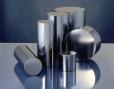
Silicon irradiation
ANSTO is one of the world's leading providers of irradiation services for silicon ingots, which are used by the multimillion dollar electronics industry across Europe and Asia. Each year, ANSTO irradiates more than 50 tonnes of silicon.
Surfing at the atomic scale: ANSTO scientists confirm experimentally new fundamental law for liquids
The first experimental evidence to validate a newly published universal law that provides insights into the complex energy states for liquids has been found using an advanced nuclear technique at ANSTO.
Nuclear medicine production at ANSTO
Ongoing media statements relating to nuclear medicine production.
The world synchrotron community gathers
Event held to mark anniversary of SPRing-8 in Japan.

Stable Isotope Analyst
Role at ANSTO

Radioactive Waste Management Specialist
Laura Maynard is a Radioactive Waste Management Specialist working in ANSTO’s Nuclear Waste Solutions division.
Research on nuclear fuel burnup supports reduction of waste and fuel costs
Recent research investigating what occurs at the interface of the uranium oxide fuel pellet and the surrounding cladding supports efforts to increase the burnup level of nuclear reactor fuel.