Services - Kowari
Sample environments, Data analysis.


Showing 861 - 880 of 1705 results
Sample environments, Data analysis.
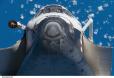
Material researchers at ANSTO use a range of in-house capabilities in the development, testing and characterisation of existing and emerging materials for extreme environments of the novel nuclear (fission/fusion) based energy-generation systems.
A team of scientists led by Monash University and the University of Melbourne in association with the Peter Doherty Institute for Infection and Immunity have made progress in clarifying the molecular interactions that underpin how our adaptive immune cells recognise SARS CoV-2, which causes COVID-19.
An international collaboration led by The University of Sydney and supported by ANSTO has developed an advanced, innovative artificial intelligence application that could be used to help examine tissue samples and identify signs of disease/
An Australian-led international research team, including a core group of ANSTO scientists, has found that doping a promising material provides a simple, effective method capable of extracting uranium from seawater.
Two early career nuclear scientists who received international scholarships have spent time in the Nuclear Fuel Cycle group at ANSTO are making progress on their work to improve nuclear fuel.

Frequently asked questions about the ANSTO Security Process, travel funding, ANSTO Research Portal and ACNS Customer Portal.
Using isotopes to understand saltwater intrusion of Rottnest Island groundwater
Radiocarbon measurements at ANSTO’s Centre for Accelerator Science have supported research published that provided insights into what the environment was like for the Aboriginal artists who created rock art over intervals spanning 43,000 years.
Dr Ceri Brenner appointed new leader of the Centre for Accelerator Science

Chemical deuteration involves deuterating whole molecules or building blocks for the synthesis of a desired molecule by exposing them to heavy water (deuterium oxide) at high temperatures and pressures in the presence of a catalyst. If required, compounds can then be synthesised from the deuterated building blocks using organic chemistry techniques.
Copper (Cu) is a harmful contaminant in freshwater systems, the concentration of which is being increased by human activity. The impact of elevated copper on fish, particularly during the larval development stage, is not well understood.