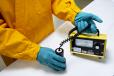
ANSTO: A global leader in radiation safety and radioactive waste management
ANSTO: Australia’s knowledge centre for nuclear science and engineering.


Showing 861 - 880 of 1017 results
ANSTO: Australia’s knowledge centre for nuclear science and engineering.
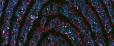
Most fingermark research has largely focussed on the organic material in residues. Consequently, a gap in fundamental knowledge exists when it comes to inorganic components such as metals.

Deaf Youth Science Camp is back for 2026! Deaf Youth Science Camp (DYSC) is a fun 4-day immersive science experience for Deaf/hard-of-hearing young people (aged 12-17 years old). Held at ANSTO at Lucas Heights, Sydney, the camp is a mix of hands-on science activities, outdoor activities and excursions to nearby science centres. Participants will work with Deaf professionals to learn about careers in STEM, develop personal and leadership skills and meet new friends. This camp is hosted by Deaf Youth Australia and ANSTO, and funded by a National Science Week grant.
At ANSTO we understand that diverse teams produce better outcomes – and we value the merit that a diverse perspective can bring to the quality and outcomes of our work, and the way we get the job done.
With a well-established portfolio of nuclear research and the operation of Australia's only nuclear reactor OPAL, ANSTO scientists conduct both fundamental and applied research on fuel for current, advanced, and future nuclear technology systems.
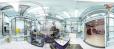
The Powder Diffraction beamline at the Australian Synchrotron is optimised for carrying out structural investigation under non ambient conditions and as a function of time.
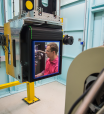
The High Performance Macromolecular Crystallography beamline will enable the study of very small (sub-5 micrometre) or weakly diffracting crystals, providing a state-of-the-art high-throughput facility for researchers. MX3 will be able to study the structures of large proteins and protein complexes for virology, drug design and industrial applications via goniometer mounted crystals, in-tray screening, or via serial crystallography methods.

ANSTO has a range of capabilities and expertise to support aerospace and space research.


Role at ANSTO
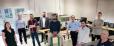
The Detection & Imaging group builds on ANSTO’s 70-year history of scientific achievements and contributions in meeting the nuclear needs of industry, globally.
The United Uranium scholarship recognises outstanding ability and promise in the field of nuclear science and technology, specifically as it applies to nuclear energy.

Dr Karina Meredith was appointed Director of the new Research and Technology Group for Environment effective 15 January 2024.

ANSTO is Australia’s nuclear centre of excellence. It has a mandated role to advise the Australian Government on all nuclear and science technology matters.

There has been an increasing pressure on construction industrial sector to utilise innovative materials that not only meet the requirements of ambitious architectural designs, but also reduce CO2 emissions.

Ultra-flexible electronics has many potential applications within areas such as for example the military, healthcare and energy.
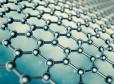
The growth and incorporation of graphene into semiconductor device architectures has been limited by challenges related to the quality, reproducibility, and high process temperatures required to grow it on suitable substrates.
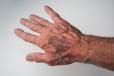
As blood breaks down in the skin tissue, the colour of a bruise changes with time. As such, it may be used to find out information about the age of the bruise and hence a timeframe of when the incident that caused the mark took place.
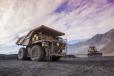
For over 45 years, ANSTO has provided consultancy and process development services to the mining and minerals processing industries in Australia and globally.