Reconstructing a history of palaeoclimate in south-eastern Australia
The role of trace elements as palaeoclimate proxies has been explored in ANSTO-led collaborative environmental research.


Showing 921 - 940 of 2687 results
The role of trace elements as palaeoclimate proxies has been explored in ANSTO-led collaborative environmental research.
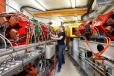
The Accelerator Science group purse a broad research program with the aims of improving the performance and reliability of our accelerators, increasing their research capabilities and developing the next generation of accelerator technology.


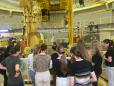
2025 ANSTO Work Experience Program will be open for applications in the new year.

The National Deuteration Facility offers access to deuterated molecules prepared by both in vivo biodeuteration and chemical deuteration techniques.

Read about an ANSTO scientist and their work to prepare for a school project or interview.
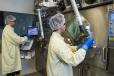
See details of previously published customer updates from our Health products team.
Voucher scheme accelerating medical research
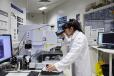
The Infrared Microspectroscopy beamline combines the high brilliance and collimation of the synchrotron beam through a Bruker V80v Fourier Transform Infrared (FTIR) spectrometer and into a Hyperion 3000 IR microscope to reach high signal-to-noise ratios at diffraction limited spatial resolutions between 3-8 μm.

For over 45 years, ANSTO has provided consultancy and process development services to the mining and minerals processing industries in Australia and globally.
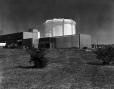
In April 15, 1953, Australia entered the nuclear science arena, when the Atomic Energy Act came into effect. The Australian Atomic Energy Commission (AAEC) followed and in 1987 the AAEC evolved into the Australian Nuclear Science and Technology Organisation (ANSTO) as it’s known today.

The BRIGHT Project will expand the beamline infrastructure of the Australian Synchrotron to increase both its capacity and capabilities.