FLEET appointment
Instrument scientist and expert in low dimensional magnetism Dr Kirrily Rule joins FLEET ARC Centre.


Showing 921 - 940 of 1705 results
Instrument scientist and expert in low dimensional magnetism Dr Kirrily Rule joins FLEET ARC Centre.
ANSTO has secured a $1.62 million Medical Research Future Fund (MRFF) grant under the Australian Brain Cancer Mission’s 2024 Brain Cancer Discovery and Translation program
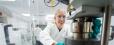
Chemical deuteration involves deuterating whole molecules or building blocks for the synthesis of a desired molecule by exposing them to heavy water (deuterium oxide) at high temperatures and pressures in the presence of a catalyst. If required, compounds can then be synthesised from the deuterated building blocks using organic chemistry techniques.
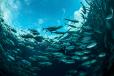
Copper (Cu) is a harmful contaminant in freshwater systems, the concentration of which is being increased by human activity. The impact of elevated copper on fish, particularly during the larval development stage, is not well understood.
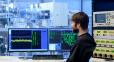
Accelerator Mass Spectrometry (AMS) is an ultra-sensitive analytical technique based on the use of an ion accelerator as a powerful mass spectrometer.
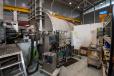
Sample environments, Data Analysis.
ANSTO contributes to new international project to improve how the world assesses the economic viability of Small Modular Reactors
In early February, ANSTO was honoured to host the International Atomic Energy Agency (IAEA) National Liaison Officers Meeting and Sub Regional Approach to the Pacific Islands (SAPI) Programme, which focused on the development and delivery of the IAEA Technical Cooperation Programme in the Pacific.
Advanced imaging technique used to study triggers that lead to tree death

Evidence for existence of a highly exotic and elusive state of matter, known as a magnetic ‘spin nematic’ phase in a natural mineral called linarite.
An investigation that set out to resolve some of the uncertainty in the sources and quantities of pollutants reaching Antarctica has produced a new experimental technique to identify and characterise recently terrestrially-influenced air reaching Antarctica.
Stable, highly conductive 2D nanosheets of boron nitride promising new material.

ANSTO’s Radioanalytical Chemistry (RAC) facility combines techniques in radiochemistry and radiological measurement by alpha spectrometry, gamma-ray spectrometry, and liquid scintillation analysis to deliver radiological assessments.
Macromolecular crystallography helps determine the atomic structure.
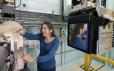
The Australian Synchrotron in Melbourne has a suite of X-ray and infrared beamlines with applications in health, medical, food, environment, nano-technology, energy, mining, advanced materials, agriculture and cultural heritage.

Terahertz/Far Infrared beamlines assisted investigation into possible composition of lower atmosphere of Saturn's moon Titan.