
Operations
Accelerator Operators operate the synchrotron and its subsystems 24 hours a day, six days a week, and maintain very high beam availability for facility users.


Showing 941 - 960 of 2698 results
Accelerator Operators operate the synchrotron and its subsystems 24 hours a day, six days a week, and maintain very high beam availability for facility users.

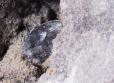
Nitrogen-doped ultrananocrystalline diamond (N-UNCD) is a promising material for future biological and electrochemical applications.

ANSTO’s Lucas Heights campus has an extensive range of specialised facilities and capabilities that are available to assist industry-based professionals in solving problems. Please contact us to discuss how we can assist you. We are open to entering into commercial arrangement with appropriate partners.

Low-cost X-ray detectors featuring high sensitivity, durability and physical flexibility are required in fields ranging from medical imaging to defence. In this study, a new material for X-ray detection was coupled with inkjet printing to produce a series of prototype X-ray detectors.

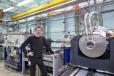
X-ray absorption spectroscopy (XAS) is a versatile tool for chemistry, biology, and materials science. By probing how x rays are absorbed from core electrons of atoms in a sample, the technique can reveal the local structure around selected atoms.

Since the discovery of superconducting Caintercalated graphite (CaC6) the intercalation of epitaxial graphene on SiC(0001) with Ca has been studied extensively in order to achieve superconductivity.

ANSTO provides access to specialised facilities and capabilities by application. Please ensure that you contact the relevant ANSTO scientist for advice before submitting a proposal.
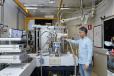
The THz/Far-IR Beamline couples the high brightness and collimation of a bend-magnet synchrotron radiation to a Bruker IFS125HR spectrometer providing high-resolution spectra (0.00096 cm-1) with signal to noise ratio superior to that of thermal sources up to 1350 cm-1 for gas-phase applications; the beamline also delivers signal to noise ratio superior to that of thermal sources up to 350 cm-1 for condensed phase samples.
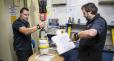
Developed by ANSTO’s predecessor the Australian Atomic Energy Commission (known as the AAEC) in the late 1960s, the Technetium-99m Generator revolutionised nuclear medicine imaging in Australia by enabling imaging procedures to be performed not only in major capital cities but throughout regional and rural Australia.

The Multi-wavelength absorption black carbon instrument MABI can determine the concentration and source of black carbon pollution.
Atomic structure of new cathode material for sodium ion batteries helps explain long life
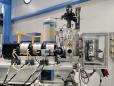
The high-energy heavy-ion microprobe is used for the characterisation or modification of material properties at depths from approximately 1 micrometre to maximum depths of up to 500 micrometres from the material surface.
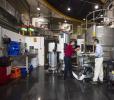
ANSTO offers a diverse range of career opportunities within science, engineering, corporate services and trade disciplines.
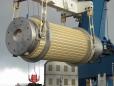
Combining scientific expertise with more than $1.3 billion in unique operational assets to provide optimal radioactive waste solutions.

ANSTO is one of Australia’s largest public research organisations and is widely recognised as an international player in the field of nuclear science and technology.
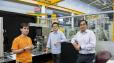
The User Office is the first point of contact for all new and returning facility users accessing ANSTO’s wide range of world-class research infrastructure. These users may be internal ANSTO researchers, external merit researchers, commercial clients, scientific collaborators and partners.

Health researchers at ANSTO use world-class nuclear and isotopic techniques to undertake research and development activities to address some of the most challenging health problems.

We understand that electrochemistry, electrode design and failure modes of your battery system are going to determine your design and research decisions.