Detecting nuclear material
The new gamma imaging technology developed at ANSTO has been used to detect the presence and location of nuclear material for the International Partnership for Nuclear Disarmament Verification.


Showing 941 - 960 of 1658 results
The new gamma imaging technology developed at ANSTO has been used to detect the presence and location of nuclear material for the International Partnership for Nuclear Disarmament Verification.

Explore this world-class facility that is able to examine materials at an atomic level and learn about the broad range of important research applications from medicine to biotechnology, advanced materials and even cultural heritage.
Guided 90-minute public tours of the Australian Synchrotron are available throughout the year.
Research portfolio and future expansion of Australian Centre for Neutron Scattering discussed
Australian Centre for Neutorn Scattering - National Deuteration Facility Advisory Committee meets
ANSTO scientist, Dr Klaus Wilcken of the Centre for Accelerator Science, used cosmogenic nuclide dating to determine the ages of layered sand and gravel samples, in which seven footprints of the flightless bird, the moa, were found on the South Island in New Zealand in 2019.
The process by which plastic degrades in the ocean facilitates its entry into the natural carbon cycle efficiently as carbon dioxide.
Commitment to undertake health research.
China’s vertical sandstone pillars studied using nuclear techniques
Investigators have verified and quantified the relationship between the Earth’s land biosphere and changes in temperature and provided evidence that temperature impacts the cycling of carbon between land, ocean and the atmosphere.
A team of researchers from ANSTO and University of Technology Sydney have set a record by conducting thin film experiments at 1100 degrees C.
Hosts workshop on nuclear forensics for IAEA members.
Development of new techniques makes it possible to date Australian Aboriginal rock art.
ANSTO has hosted an event to launch a new Dharawal language learning resource for primary students at the nandin innovation centre.

ANSTOs capabilities are ideally suited for these investigations relating to quantum technologies.
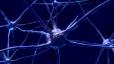
TSPO is a protein that is associated with crucial cellular functions including the activity of the mitochondria. A mouse model in which the TSPO (18 kDa) is knocked out was developed at ANSTO in collaboration with The University of Sydney.