Critical minerals projects funded under Australian Research Centre Projects Program
ANSTO is contributing to key critical minerals projects funded by the Federal Government.


Showing 941 - 960 of 2173 results
ANSTO is contributing to key critical minerals projects funded by the Federal Government.
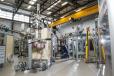
Particle Induced X-ray Emission (PIXE) is a powerful and relatively simple analytical technique that can be used to identify and quantify trace elements typically ranging from aluminium to to uranium.
Research confirms that fraudulent Kakadu plum extracts are in circulation online and in the international marketplace.
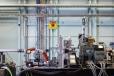
Samples on the X-ray fluorescence microscopy beamline at the Australian Synchrotron.

Bushfires heat soil to extreme temperatures and this causes oxidation of chromium to a highly toxic and carcinogenic form.
The need for a smaller, more transportable version of ANSTO’s 1500-litre atmospheric radon-222 monitor, and with a calibration traceable to the International System of Units, prompted the team to develop a 200-litre radon monitor that would meet those needs.
The nuclear medicine community has welcomed the Australian Government’s decision to provide $30 million in funding to ANSTO for the design of a new nuclear medicine manufacturing facility.
Instrument scientist and expert in low dimensional magnetism Dr Kirrily Rule joins FLEET ARC Centre.
The Government is safeguarding Australia’s sovereign capability to produce vital nuclear medicines by launching a $30 million project to design a new world-leading manufacturing facility to be built at Lucas Heights in Sydney.
The mechanical, electrical, chemical, optical and thermal properties of glass, as determined by its chemical composition and atomic structure, make it a highly useful material with a myriad of applications.
ANSTO has supported a new study published in Quaternary Science Reviews that dates the dramatic collapse of one of the largest glaciers ever documented in the Himalayas. The findings overturn a long-held assumption about what sustains wet-climate glaciers.
The Japanese experience with leading-edge radiation treatment for cancer shows tremndous success
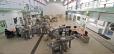
Nuclear Reaction Analysis (NRA) detects charged particles and is used predominantly to determine concentrations and depth profiles of the lighter elements.
Consultant appointed to consider a variety of financial, manufacture and import options.
Dr Jessica Hamilton, a beamline scientist at the Australian Synchrotron, has won the Falling Walls Lab competition hosted by the Australian Academy of Science for her 3 minute presentation on a novel approach to using mining waste for carbon dioxide capture and a source of carbonate minerals. The event is held to deliver solutions to some of the most promising challenges of our time.
The release of the Oppenheimer film, the story of the director of the Manhattan Project, has prompted many people to go online and search for an explanation of the difference between fission and fusion, two fundamental scientific concepts.