
Accelerator mass spectrometry techniques
Accelerator Mass Spectrometry (AMS) is an ultra-sensitive analytical technique based on the use of an ion accelerator as a powerful mass spectrometer.


Showing 101 - 120 of 498 results
Accelerator Mass Spectrometry (AMS) is an ultra-sensitive analytical technique based on the use of an ion accelerator as a powerful mass spectrometer.

Discover the amazing world of nuclear science from your classroom. Join us for Meet an Expert, Nuclear Science Inquiry Skills, Junior Science, and Online Depth Study sessions for Chemistry, Physics and Investigating Science.

Two ANSTO physicist explain the three-body problem as featured in science fiction series of the same name
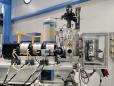
The high-energy heavy-ion microprobe is used for the characterisation or modification of material properties at depths from approximately 1 micrometre to maximum depths of up to 500 micrometres from the material surface.
Participants undertook IAEA training hosted by Macquarie University and ANSTO on use of radionuclides for soil and water investigations.

Detailed data on ANSTO electricity use and CO2 emissions for FY2024 - FY2025

International study has revealed a clustering of charged particles in the microgravity environment of space,with implications for the development of materials and better drugs that depend on the mixing of two or more charged particles.

Approximately 200 external users access the accelerators through the merit-based system, in-kind partnerships and pay for service arrangements,

A tiny 8mm by 6mm radioactive capsule went missing in January 2023, somewhere along a 1400 kilometre journey from Rio Tinto’s Gudai-Darri iron ore mine to its final destination in Perth, Western Australia. Find out how ANSTO's CORIS360® technology identified the exact location of the missing source.
PNG researcher provides a progress update on an aquaculture project to improve the industry and benefit the local population

ANSTO is proud to host the Shorebirds Competition for the fifth year. This unique environmental poster competition is free to enter and offers over $4500 in prizes for students and schools!
A large international collaboration has developed a straightforward and cost-effective synthesizing approach using a 3D printing technique to produce single atom catalysts (SACs)—potentially paving the way for large scale commercial production with broad industrial applications.

In partnership with the Australian Museum as part of National Science Week explore the 2020 hackathon theme of Deep Blue: Innovation for the future of our oceans

Read about an ANSTO scientist and their work to prepare for a school project or interview.
A new source added to ANSTO’s cosmogenic toolkit to study past climate and landscape change

ANSTO has released the Independent Safety Review of Building 23 - Nuclear medicine production facility.
Young researcher accepted into the Australian Antarctic Science Program.