


Showing 101 - 120 of 302 results
Innovative technology provides enhancement to advanced radiation therapy
Neutron Capture Enhanced Particle Therapy developed at ANSTO.

About us
The Detection & Imaging group builds on ANSTO’s 70-year history of scientific achievements and contributions in meeting the nuclear needs of industry, globally.

About the ANSTO Hackathon

Visitor Terms and Conditions
On behalf of ANSTO thank you for your interest in our tours. We hope your visit to ANSTO will be both enjoyable and informative.

Public Interest Disclosure Scheme
The Public Interest Disclosure Act 2013 aims to promote integrity and accountability in the Australian Public Sector by encouraging the disclosure of information about actual or suspected wrongdoing, protecting people who make disclosures and ensuring that disclosures are properly investigated and dealt with.
An investigation of residual stresses in insulated rail joints
Nuclear techniques reveal membrane interaction of novel therapeutic option to combat superbugs
ANSTO has contributed to research on a novel therapeutic option for combatting antimicrobial-resistant Gram-negative bacteria, known as superbugs.

Jack the Super Prawn
Jack the Super Prawn lives in the Barrier Reef and uses his powers to protect the environment. With JackVac, he cleans up rubbish and impurities in seawater. With JackCopter, he soars high into the air, where you wouldn't normally see a prawn.
PET innovation
Tool developed for producing F-18 radiopharmaceuticals for PET imaging.

United Uranium Scholarship - Privacy Collection Notice
In accordance with the Trust Deed, the United Uranium Scholarship is awarded to ‘promising young scientists’ from any Australian organisation or institution whose research or work is in the field of nuclear energy.
Leveraging over half a century of knowledge in the safe management of radioactive waste
ANSTO's Chief Nuclear Officer shares insights on the safe management of Australia's nuclear waste.
Class of 2021 - Bright Sparks Signal Bright Future for Australia
The 2021 intake of bright young graduates have arrived at the ANSTO Precinct at Lucas Heights and this week will commence their exciting new career to become the nation’s future leaders in STEM and innovation.
ANSTO radon detector redefines the cleanest air on the planet
Advances in radon measurement technology by ANSTO researchers over the past decade have enabled the improved characterisation of the composition of pristine air masses that reach Antarctica.
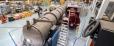
Industry Access - Lucas Heights
ANSTO’s Lucas Heights campus has an extensive range of specialised facilities and capabilities that are available to assist industry-based professionals in solving problems. Please contact us to discuss how we can assist you. We are open to entering into commercial arrangement with appropriate partners.
Promising new proton conductor for next-generation fuel cells
ANSTO has contributed to work by scientists from the Tokyo Institute of Technology on a promising proton conductor for next-generation ceramic fuel cells.
Restarting a nuclear reactor series: It’s all in the preparation and slow and careful actions
ANSTO recently re-started the OPAL Reactor after a six-month shutdown for essential maintenance and the installation of an upgraded facility.
nandin deep tech hothouse sees businesses bloom
Two startups supported by the nandin Innovation Centre at ANSTO have hit the ground running in 2021 securing major opportunities from state governments to see their businesses thrive.
Chasing ghosts at the Australian Centre for Neutron Scattering
Neutron and gamma ghost imaging are important scientific developments reported in two publications, and the subject of an Australian Research Council Discovery Project grant awarded to a team that includes ANSTO scientists
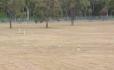
Little forest legacy site
ANSTO is responsible for the Little Forest Legacy Site (LFLS) located within the ANSTO Buffer Zone boundary. This site, formerly known as the Little Forest Burial Ground (LFBG), was used by the Australian Atomic Energy Commission (AAEC) during the 1960’s to dispose of waste containing low levels of radioactivity and beryllium oxide (non-radioactive) in a series of shallow trenches. There has been regular monitoring of the site since 1966 and the results have been reported in ANSTO’s environmental monitoring reports.