Webinar: Strengthening the future of the nuclear workforce
Join us for this online webinar to explore and discuss the huge opportunities in growing a dynamic and impactful future nuclear workforce.


Showing 101 - 120 of 127 results
Join us for this online webinar to explore and discuss the huge opportunities in growing a dynamic and impactful future nuclear workforce.
Study explored how key proteins manage dietary cholesterol absorption and elucidated crucial transport mechanisms that contribute to cholesterol balance in the body.
nandin member, SVSR, report on their proof-of-concept for a reusable Graphene Oxide (GO) membrane to capture waste water vapours from ageing sewerage systems.
ANSTO scientist, Dr Klaus Wilcken of the Centre for Accelerator Science, used cosmogenic nuclide dating to determine the ages of layered sand and gravel samples, in which seven footprints of the flightless bird, the moa, were found on the South Island in New Zealand in 2019.

The first demonstration of reversible symmetry lowering phase transformation with heating.

Role at ANSTO
China’s vertical sandstone pillars studied using nuclear techniques

Australian Nuclear Science and Technology Organisation (ANSTO) is committed to protecting your personal information in accordance with the Privacy Act 1988 (Cth) (Privacy Act) and the Australian Privacy Principles.

A tiny 8mm by 6mm radioactive capsule went missing in January 2023, somewhere along a 1400 kilometre journey from Rio Tinto’s Gudai-Darri iron ore mine to its final destination in Perth, Western Australia. Find out how ANSTO's CORIS360® technology identified the exact location of the missing source.

Following your experiment at the Australian Synchrotron there are certain tasks that users can complete including a user feedback survey and claiming reimbursement for travel expenses.
Blake Orr from ARPANSA review the Netflix series Radioactive Emergency.
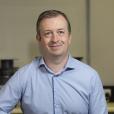
Dr David Boardman is the Chief Technology Officer & Principal Scientist for Detection & Imaging.
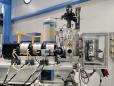
The high-energy heavy-ion microprobe is used for the characterisation or modification of material properties at depths from approximately 1 micrometre to maximum depths of up to 500 micrometres from the material surface.

Role at ANSTO

(ANSTO) has welcomed the launch of the new National Science Statement and revitalised National Science and Research Priorities by Minister for Industry and Science, The Hon Ed Husic MP and Australia’s Chief Scientist, Dr Cathy Foley AO PSM.