Radiocarbon dating and stable isotope analysis contribute to Antarctic research
Study shows for the first time that vegetation in the Windmill Islands, East Antarctica is changing rapidly in response to a drying climate.


Showing 101 - 120 of 332 results
Study shows for the first time that vegetation in the Windmill Islands, East Antarctica is changing rapidly in response to a drying climate.
ANSTO seeks candidates who are passionate about making a contribution to Australian society through supporting nuclear science and technology.
Developed by ANSTO’s predecessor the Australian Atomic Energy Commission (known as the AAEC) in the late 1960s, the Technetium-99m Generator revolutionised nuclear medicine imaging in Australia by enabling imaging procedures to be performed not only in major capital cities but throughout regional and rural Australia.

ANSTO's OPAL reactor is one of the world's most advanced and reliable research reactors today. To ensure we can continue operating OPAL safely and reliably and maximise utilisation, ANSTO must regularly carry out maintenance and upgrades.
New high energy ion microprobe beamline supports space research on the effects of radiation on astronauts.
Researchers from ANSTO and NASA’s Jet Propulsion Laboratory have uncovered the likely mineral composition of Saturn’s largest moon, Titan, revealing a world of exotic organic crystals unlike any found on Earth.


Professor Lee is a Nuclear Medicine Physician at Austin Health in Melbourne, with extensive nuclear medicine expertise and is very highly regarded in the nuclear medicine community.
An international research team has discovered how a bacterial toxin, known as Ssp, is capable of entering and killing a wide range of living cells, including human cells using the Australian Synchrotron.
In 2017, ANSTO's CEO signed a Memorandum of Understanding with Sri Lanka to work together to investigate the epidemiology of Chronic Kidney Disease of unknown origin (CKDu).

At ANSTO we understand that diverse teams produce better outcomes – and we value the merit that a diverse perspective can bring to the quality and outcomes of our work, and the way we get the job done.

Think Science! 2025 Summary and results
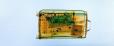
Low-cost X-ray detectors featuring high sensitivity, durability and physical flexibility are required in fields ranging from medical imaging to defence. In this study, a new material for X-ray detection was coupled with inkjet printing to produce a series of prototype X-ray detectors.

A selection of research highlights, instrument news and technical developments for scientists.

ANSTO operates Work Health and Safety and Environmental Management Systems designed to ensure the safety of its employees, partners and members of the public to minimise the impact of our activities on the environment.
Padstow North and Caringbah North selected as winners of ANSTO's Top Coder competition.
Melbourne researchers map the structure of a key COVID-19 protein using the Australian Synchrotron
Monash University, University of Queensland and Australian National University researchers have used ANSTO’s Australian Synchrotron in their study of meteorites found on Earth that could be used in future to find evidence of life on the planet Mars.