
Beamtime Guide, Technical Info and Updates - MX1 & MX2
The Macromolecular Crystallography beamlines at the Australian Synchrotron (MX1 and MX2) are general purpose crystallography instruments for determining chemical and biological structures.


Showing 1061 - 1080 of 1706 results
The Macromolecular Crystallography beamlines at the Australian Synchrotron (MX1 and MX2) are general purpose crystallography instruments for determining chemical and biological structures.

A large international research team led by Academia Sinica in Taiwan investigated how heat is transferred in an advanced thermoelectric material made with germanium (Ge) and tellurium (Te) and doped with antimony (Sb). These devices are used to power space probes such as the Mars Curiosity Rover.

Project members of the Water Isotope Network.
The Australian Neutron Beam Users Group (ANBUG) presented annual awards to accomplished neutron scientists at the combined ANSTO User Meeting - AUM2023 held in late November 2023.
ANSTO has a new roadmap for future development of its sovereign infrastructure, capabilities and expertise.
Wolfgang Kubicki, MdB and a small delegation visited to see the Spatz neutron instrument donated by Helmholtz Zentrum Berlin (HZB) and discuss research.
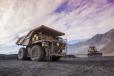
For over 45 years, ANSTO has provided consultancy and process development services to the mining and minerals processing industries in Australia and globally.

The design and implementation of alternative energy sources is one of the greatest scientific and social challenges of our time.
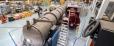
ANSTO’s Lucas Heights campus has an extensive range of specialised facilities and capabilities that are available to assist industry-based professionals in solving problems. Please contact us to discuss how we can assist you. We are open to entering into commercial arrangement with appropriate partners.
This week, ANSTO hosted the 10th annual Regional Advisory Safety Committee for research reactors in Asia pacific (RASCAP). This a joint IAEA-Asian Nuclear Safety Network (ANSN) supported forum to foster networking and regional cooperation, and for facilitating use of competencies in the region to cover specific safety issues in research reactors.
International collaboration uses cryo-electron tomography to determine the structure of a complex responsible for sorting and delivering cellular cargo.
Powder diffraction and X-ray fluorescence microscopy support investigation of pigments in rock art.
Million year lag time in transport of sediment in Murray Darling River Basin system.
Australia and Sri Lanks signs new partnership to fight chronic kidney disease.