

Showing 1101 - 1120 of 1171 results
First light achieved for new micro-computed tomography beamline under Project BRIGHT
Project Bright, the construction of eight new beamlines at ANSTO’s Australian Synchrotron has reached a milestone by achieving ‘First Light’ for the new micro-computed tomography (MCT) beamline in late NovembeR.
Understanding how a common food additive causes changes in the microbiome
ANSTO has collaborated on a study assessing the impact of the commonly-used food additive titanium dioxide (TiO2) on gut microbiota and inflammation.
Interactions of nanoplastics
Exploring the interaction of polystyrene nanoplastics and blood plasma proteins.
Proposal round closed
Proposals to Australian Centre for Neutron Scattering and National Deuteration Facility closed
19th ACNS/NDF proposal round closed yesterday
Sharing expertise on next generation batteries
ANSTO neutron diffraction scientist was among the experts presenting on next-generation batteries at South Korean conference.
Progress on low energy electronics
Soft X-ray experiments used to characterise new thin film topological Dirac Semimetal.
ANSTO taking part in international coastal pollution studies
Revealing the sources of Sydney’s air pollution
Seabird feathers
Advanced imaging reveals unusual, unseen patterns in seabird feathers.
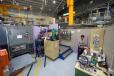
Kookaburra - Ultra small angle neutron scattering
Ultra small angle neutron scattering on Kookaburra is used to study the size and shape of objects of size 10 micrometres and below.
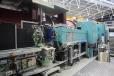
Spatz - Neutron Reflectometer
A neutron reflectometer for vertical samples.
Approach to Improve additive manufacturing processes developed
Collaborative research predicted the distortion and performance of metal parts made by laser deposition.

Animal Ethics Approval - Australian Synchrotron
Guidance for obtaining and maintaining human or animal ethics approval at the Australian Synchrotron.
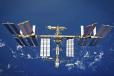
Understanding the full impact of radiation on astronauts
In space, without the protection of the magnetosphere, the type and dose of radiation is considerably different to what is naturally experienced on earth. However, it is the secondary particles of lower energies created when galactic and cosmic radiation interacts with shielding that is of concern for astronauts.
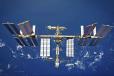
Understanding the full impact of radiation on astronauts
In collaboration with the French National Institute of Health and Medical Research (INSERM) and the French International Space Agency (CNES), ANSTO scientists are undertaking research on the radiobiological effects of secondary particles that are created when radiation interacts with the shielding on the International Space Station.
Australian Synchrotron joins Monash and key institutions in $2.9 million new platform to support drug development
Monash University is partnering with the Australian Synchrotron and other key institutions to launch a $2.9 million national project – delivering a robotic laboratory capable of drastically speeding up the invention, trials and commercialisation of medicines by Australian researchers.
New approach can improve monitoring of contaminants in groundwater
The outcome could have significant implications for better monitoring, management and remedial action of groundwater globally.
Event celebrates 15 years of operation of the OPAL multi-purpose reactor
ANSTO and the Embassy of Argentina in Australia proudly hosted an event commemorating the 15th anniversary of the opening of the Open Pool Australian Lightwater (OPAL) multi-purpose nuclear reactor on 18 October.