

Showing 1121 - 1140 of 1171 results

Code of Conduct: Small Angle Scattering Workshop 2022
Code of Conduct: Powder Diffraction Workshop 2022
Code of Conduct: ANSTO-HZB Neutron School
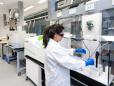
Analytical Facility
ANSTO Analytical Facility conducts a range of analyses required to support our commercial projects, and can analyse everything from simple samples to complex matrices not typically dealt with by standard commercial laboratories.
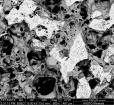
Mineralogy Facility
Our dedicated mineralogists provide specialised knowledge on the mineralogy of ores/concentrates and the wide variety of solids and residues typically generated in hydromet processes. We have well-equipped facilities that can handle a diverse range of samples, particularly those containing elevated concentrations of uranium and thorium.
Australian Synchrotron MX2 Upgrade
Improving the production of piezoelectric materials for naval sonar systems
Thales Australia, a key supplier to the Australian Defence Forces, provided an industrial challenge to National Graduate Innovation Forum participants relating to the production of piezoelectric ceramic components used in naval sonar arrays and systems.
Actinide and heavy ion isotopic analysis
ANSTO has the capability to analyse heavy isotopes such as 129I, platinum group elements, 236U and Pu isotopes.
Neutrons: Key tool in modern manufacturing of aircraft components
Transistors and NASA's radiation paradox: strength in detection, weakness in space operations
The nature of Metal-Oxide-Semiconductor Field Effect Transistors (MOSFETs) present a fascinating paradox in space exploration. Their strength in radiation detection becomes their weakness in space operations, exposing an Achilles' heel for NASA. Yet, these same devices monitor radiation doses received by humans on earth and in space.

Think Science! Competition 2026
The Think Science! competition encourages students in Years 3-10 to learn science inquiry skills in a fun and accessible way! Entry is FREE and there are generous prizes for winning schools. Any topic can be chosen, and special materials are not required.
RemLife software helps power stations improve efficiency of operations
Innovative software tool developed at ANSTO used at power stations to help maintain plant components and improve the efficiency of operations.
Personalised cancer therapy
Research collaboration with University of Sydney focuses on a personalised approach to cancer treatment.
Code of Conduct: AANSS 2024
Code of Conduct: User Meeting 2022
Significant progress on breakthrough cancer therapy
Research has demonstrated that internally generated neutrons could be used to effectively target micro-infiltrates and cancer cells outside of the defined treatment regions.
Pyrochlore transformation of defect fluorite?
Mathematical insights explain inconsistencies in experimental data: pyrochlore transformation into defect fluorite or not?
Why OPAL is an advanced reactor
With the screening of the popular HBO series about Chernobyl, we asked our Nuclear Analysis team for their insights on key differences between the reactor in the TV series, a Generation II RBMK power reactor and ANSTO’s state of the art research reactor OPAL.

Australian Synchrotron guesthouse
The Australian Synchrotron has an on-site Guesthouse for users and AS guests.