
2024 Think Science Competition Summary and Results
Think Science! 2023 Summary and Results


Showing 121 - 140 of 671 results
Think Science! 2023 Summary and Results
Think Science! 2025 Summary and results
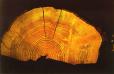
Radiocarbon dating is a well-known method for determining the age of materials up to the age of approximately 50,000 years.
Physicist and cancer research Dr Mitra Safavi-Naeini, Macromolecular crystallography beamline scientist Dr Eleanor Campbell and Engineering Support Workshop Manager Bianca Shepherd have been chosen by Science and Technology Australia as the next Superstars of STEM

ANSTO and the University of Wollongong are jointly operating a unique laboratory able to extract carbon-14 (radiocarbon) atoms out of a rock that is attracting global interest as a new tool to better understand recent changes in Earth’s climate system and rates of landscape change over the past 20, 000 years.

The Radon Analytical Laboratory operates a comprehensive suite of instrumentation for the monitoring and analysis of natural radioactivity resulting from radon, thoron and their progeny.
ANSTO today welcomed a significant Federal Government funding allocation to further safeguard the production of life-saving nuclear medicines in Australia.
Applications are now being accepted for the Industry foundations Scholarship.
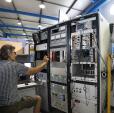
ANSTO provides multiple sources for radiation testing of materials and devices including Co-60 gamma sources, x-ray, proton and heavier ion-beams.
The 2021 intake of bright young graduates have arrived at the ANSTO Precinct at Lucas Heights and this week will commence their exciting new career to become the nation’s future leaders in STEM and innovation.

Role at ANSTO
Dr Richard Mole is an instrument scientist co-responsible for the cold-neutron time-of-flight spectrometer PELICAN.
The International Synchrotron Access Program (ISAP) is administered by the Australian Synchrotron and is designed to assist Australian-based synchrotron users to access overseas synchrotron related facilities.
ANSTO is interested finding students to collaborate on Generation IV reactor systems.

ANSTO sets out the following terms and conditions relating to users who access our facilities for the purpose of research.

Radioisotope tracing technique are used to understand the uptake of contaminants, and nutrients, bioaccumulation, by aquatic organisms and terrestrial plants.

Frequently Asked Questions on the Macromolecular Crystallography beamlines (MX1 and MX2)

ANSTO’s commitment to Diversity and Inclusion extends to all events we host or conferences we support through sponsorship, expertise (presenting/speaking) or staff attendance as delegates.