

Showing 121 - 140 of 1156 results
What World Environment Day means to our scientists
ANSTO environmental scientists highlight need to monitor legacy nuclear fallout in Antarctica
ANSTO environmental scientists have alerted the scientific community of the critical need to monitor changes to ice containing potential nuclear fallout that reached Antarctica from 20th century atmospheric weapons testing.

Apps
ANSTO has a variety of games and apps to educate students on how radiation works, nuclear medicine, the periodic table, and atom building.

United Uranium Scholarship - Privacy Collection Notice
In accordance with the Trust Deed, the United Uranium Scholarship is awarded to ‘promising young scientists’ from any Australian organisation or institution whose research or work is in the field of nuclear energy.
ANSTO researchers featured in Careers with Science publication
European neutron scattering research community faces challenges
Chronic kidney disease of unknown origin
In 2017, ANSTO's CEO signed a Memorandum of Understanding with Sri Lanka to work together to investigate the epidemiology of Chronic Kidney Disease of unknown origin (CKDu).
ANSTO’s course elevates nuclear literacy across Government staff
An accomplished international photographer has capture dazzling new images of one component of the main ring at our Australian Synchrotron and provided an inside view of the electron’s path when it is used.
Managing Radioactive Waste
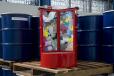
ANSTO has safely managed its radioactive waste for over 60 years. Waste is managed in accordance with national and international standards.
What's new in nuclear power technologies
It's ANSTO's role to keep Australia across the very latest developments in nuclear science and technology from around the world. Part of this responsibility is keeping us abreast of the latest developments in nuclear power technologies.
Shutting down a nuclear reactor is a slow and methodical process: A closer look
The shutdown of a nuclear reactor can be done manually by an operator following a well-established operating procedure.

FAQs - Macromolecular Crystallography
Frequently Asked Questions on the Macromolecular Crystallography beamlines (MX1 and MX2)

What are radioisotopes?
Radioisotopes are widely used in medicine, industry, and scientific research. New applications for radioisotopes are constantly being developed.
TSPO: Ancient gene ignites potential for drug development

Partnerships
ANSTO works in partnerships and collaborative ventures with national and international organisations. Partner with ANSTO.

Food Materials Science
The Food Materials Science project applies nuclear-based techniques to investigate fundamental and industrial problems of national significance in food science, including food processing and product development, ingredient selection, food, and health.
Insights on service life of industrial components
Electron and X-ray diffraction techniques provide insights into material damage under stress-strain conditions.
Nuclear techniques reveal 'stone age': dating kidney stones
Scholarship recipients focus on recycled fuels to improve sustainability of nuclear industry
Two early career nuclear scientists who received international scholarships have spent time in the Nuclear Fuel Cycle group at ANSTO are making progress on their work to improve nuclear fuel.