
Collaborators - Planetary Materials
We are part of the Planetary Science community in Australia


Showing 1261 - 1280 of 1694 results
We are part of the Planetary Science community in Australia
Let your students lead a 30-minute Q&A session with our ANSTO experts about one of the following three topics:
- Nuclear medicines
- Nuclear techniques to study the environment
- Fission and its applications in reactors
Please ensure your students do some pre-reading about the research topic and come prepared with questions to ask during the session. We also ask that teachers send us a copy of the student questions the day before, so we can adequately prepare for your session. Teachers must be present during the session with their students.
Cost: Free


Deuteration and nuclear techniques can contribute to the science of beauty.


Technical information on instruments, facilities, and access for users. The Centre is one of three research infrastructure facilities at ANSTO supported by NCRIS.

At ANSTO we have a large range of facilities that can be used to investigate planetary materials.
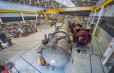
Scientists and researchers within ANSTO's Australian Centre for Neutron Scattering area have been published in a wide range of publications and have presented at many conferences.

In cooperation with ANSTO and for the third year running, the IAEA has recently hosted a two-week online training course for women professionals working in numerous nuclear industries around the world, titled 'Women 4 Nuclear Science in Education and Communications'.
Research explores how structure contributes to function in food
ANSTO will participate in a New Zealand Marsden project which will search for chemical clues linked to the origins of life on Titan, Saturn’s largest moon.
A new imaging technology developed at ANSTO makes it possible to image, identify and locate gamma-ray radiation in a safe and timely manner.
ANSTO’s Dr Joanne Lackenby and Dr Katie Sizeland have been selected 2018 Superstars of STEM as some of Australia’s most inspiring scientists, technologists and educators.
Collaborative research predicted the distortion and performance of metal parts made by laser deposition.