Showing 141 - 160 of 796 results
Pioneering research has confirmed that the current level of rainfall recharging groundwater in southwest WA is at its lowest for at least the last 800 years
In a world-first study, Australian environmental scientists have used cave stalagmites as a record of groundwater replenishment over time, that showed the current level of rainfall recharging groundwater in southwest WA is at its lowest for at least the last 800 years.
First synchrotron light is a milestone for new instruments at ANSTO’s Australian Synchrotron
NSTO’S major project to introduce eight new beamlines at the Australian Synchrotron has reached a milestone with the delivery of ‘first light’ to the new MEX-1 beamline.
Australia’s best and brightest nuclear scientists recognised in 2018 ANSTO Awards
The ANSTO Awards in Nuclear Science and Technology 2018 were presented on Friday 2 November at The Australian Museum, and showcased ANSTO’s unique nuclear science and technology capabilities, which enable progress in the key areas of health research and innovation for industry.
Statement of Intent
In January 2026, Mr Michael Quigley AM, ANSTO Board Chair, shared ANSTO's Statement of Intent with the Minister for Industry and Innovation, and Minister for Science.
From digital to biological: A full-stack research capability
A unique scientific capability comprising a single research platform for high-fidelity simulation, real-time dosimetry, and biological response data is available all from a neutron instrument.
Environment researchers share expertise
Project focuses on enhancing crop productivity in Asia Pacific countries by improving soil and water.
ANSTO Senior Officer and Executive Training Course
Reconstructing a history of palaeoclimate in south-eastern Australia
The role of trace elements as palaeoclimate proxies has been explored in ANSTO-led collaborative environmental research.
Training session highlighted an approach to calculate the ingested dose of radionuclides in seafood
Dr Mathew Johansen, an environmental scientist at ANSTO, presented in an online IAEA training workshop on Advanced Topics in Radiochemistry Techniques this week.
Studying Western Australian caves to help us understand climate change
On average, there is now 17 per cent less rainfall across Western Australia’s south-western region than was recorded prior to 1970. This rainfall reduction has economic, social and environmental implications for the region, in particular for the growing capital of Perth, as well as water-dependent industries in the state.
ANSTO's Australian Synchrotron Goes Solar for a Greener Future
More than 3,200 solar panels have been installed across the rooftops of the Australian Nuclear Science and Technology Organisation’s (ANSTO) Australian Synchrotron in Clayton, offsetting enough power to light up the whole MCG for more than five years.
World Environment Day 2019. Beating air pollution
Today is World Environment Day, a United Nations initiative for encouraging worldwide awareness and action for the environment. This year’s theme is “Beat Air Pollution”, a call to action to combat this global crisis.
Partnering in Antarctic research
Environmental scientists at ANSTO will contribute to major Antarctic research project in Antarctica funded by the Australian Research Council.
Gamma irradiation
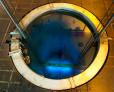
ANSTO operates a range of cobalt-60 gamma irradiators, providing the Australian community with a range of irradiation services for medical, health, industry, agriculture and research purposes.
Tracing the impact of toxic metals
Two ANSTO environmental scientists are part of a large team led by the Australian National University (ANU), who have received an Australian Research Council Discovery Project grant to investigate how environmental change and human activities since industrialisation have impacted the transport and deposition of toxic metals on the south coast of Australia, Tasmania, and remote Southern Ocean islands.

User Meeting 2020 Invited Speakers
The User Advisory Committee (UAC) are pleased to present this year's invited speakers.
International collaboration to develop better nuclear fuels and materials