Sustained contribution ANSTO Award to Prof Henk Heijnis
Environmental scientist with a passion for fieldwork and a lifelong commitment to scientific excellence


Showing 161 - 180 of 1059 results
Environmental scientist with a passion for fieldwork and a lifelong commitment to scientific excellence
Researchers from the University of Wollongong have improved a high voltage cathode material to deliver structural stability and an unprecedented electrochemical performance for lithium-ion batteries (LIBs) in work that is extendable to other types of energy storage materials.
ANSTO team earns top paper award from American Ceramic Society
ANSTO will make an application to the independent nuclear regulator, ARPANSA, to vary its license for its Interim Waste Store. The original operating license was approved in 2015, enabling the facility to hold what is called a TN-81 cask of intermediate-level radioactive waste that was safely repatriated from France in 2015.
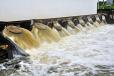
A group from Monash university has sought to make a new innovative nano-porous sieve material which has the potential to be produced on a global scale and is effective for a much longer time.
Nuclear medicine generator production to resume next week
Retrieving an Antarctic ice core more than a million years old presents challenges and opportunities.
$80.2 million in new funding to expand the research capabilities of the Australian Synchrotron.
A specialist in particle therapy treatment planning from the Mayo Clinic in the US, Professor Chris Beltran, recently visited ANSTO for an exchange for information.
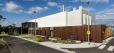
Frequently asked questions on the Mo-99 Manufacturing Facility and the ANSTO Nuclear Medicine project.
Using the past to illuminate the future: Brothers collaborate on important science documentary for ABC TV
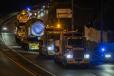
ANSTO has safely managed its radioactive waste for over 60 years. Waste is managed in accordance with national and international standards.
Swinburne University of Technology is launching an Australian-first Aerostructures Innovation Research Hub (AIR Hub) with the support of $12 million in funding from the Victorian Government.
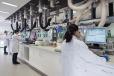
The Australian Critical Minerals Research and Development Hub (the Hub) unites the expertise of top Federal science agencies: ANSTO, Geoscience Australia, and CSIRO with the aim of addressing technical challenges and drive collaborative research across the critical minerals value chain.

This scholarship recognises outstanding ability and promise in the field of nuclear science and technology, specifically as it applies to nuclear energy. Successful applicants will demonstrate a history of interest in nuclear energy and a desire to continue this interest.
The need for a smaller, more transportable version of ANSTO’s 1500-litre atmospheric radon-222 monitor, and with a calibration traceable to the International System of Units, prompted the team to develop a 200-litre radon monitor that would meet those needs.
A lesson in Science and Sustainability.
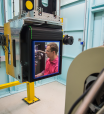
The High Performance Macromolecular Crystallography beamline will enable the study of very small (sub-5 micrometre) or weakly diffracting crystals, providing a state-of-the-art high-throughput facility for researchers. MX3 will be able to study the structures of large proteins and protein complexes for virology, drug design and industrial applications via goniometer mounted crystals, in-tray screening, or via serial crystallography methods.
ANSTO groundwater experts have collaborated with the NSW Department of Planning, Industry and Environment on a comprehensive survey of groundwater resources in the state.
A world-first processing technology developed in collaboration by ANSTO’s Minerals unit.