Insight into efficiency of organic solar cells
Understanding of micro-structure gained using X-ray scattering and spectroscopy.


Showing 181 - 200 of 222 results
Understanding of micro-structure gained using X-ray scattering and spectroscopy.
Researchers from La Trobe University have used the Australian Synchrotron to help identify a key mechanism in how SARS-CoV-2 damages lung tissue.
International research led by Curtin University and supported by ANSTO, has identified and studied the first sauropod dinosaur gut contents found anywhere in the world. The stomach content was preserved with a reasonably complete skeleton of the Australian Cretaceous species Diamantinasaurus matildae found in Winton Queensland.
Micro radiation therapy being developed by UOW in association with the Australian Synchrotron.
Research represents significant step towards developing vaccine
Stable, highly conductive 2D nanosheets of boron nitride promising new material.
Senior electronics engineer from SESAME visits following donation of instrumentation to the Middle East's synchrotron in Jordan.
Pioneering work on materials for energy production, such as lithium ion batteries, has made ANSTO a centre of specialist capabilities and expertise.
A Powerhouse exhibition was recognised with a prestigious Museums and Galleries National Award for Research at a ceremony in Perth this morning. The Invisible Revealed exhibition was organised in collaboration with ANSTO and the University of NSW.
In Part 2 of our series exploring the world of nuclear science and technology at ANSTO, we share more detailed information about the nuclear scientist’s toolkit.
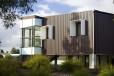
The Australian Synchrotron has an on-site Guesthouse for users and AS guests.
Protein found in tobacco plant can target and kill microorganisms,
Meeting of minds about potential next-generation cancer treatment for Australians
The analytical power of non-destructive X-ray fluorescence microscopy (XFM) at the Australian Synchrotron has been highlighted in a book chapter in Giorgione, Dante and the Sydney Incunable that features its use on an historic Renaissance work, Dante’s Commedia.
An international research team has discovered how a bacterial toxin, known as Ssp, is capable of entering and killing a wide range of living cells, including human cells using the Australian Synchrotron.
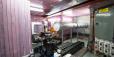
In Australia and the Southeast Asia basin, the ANSTO facility offers a wide range of unique nuclear-beam techniques for cultural heritage research.
Environmental scientists at ANSTO have been undertaking research to gain a better understanding of the potential impact of contaminants on decommissioned offshore oil and gas infrastructure since 2017