
ANSTO School Holiday Workshops
Sydney


Showing 181 - 200 of 1113 results
ANSTO has recently concluded up a successful cross-cultural nuclear science education project between Australia and Japan.
A large group of ANSTO environmental scientists and collaborators have produced the first groundwater stable isotopes, ‘isoscapes’, intuitive maps with grid data, across NSW combining new and pre-existing isotope measurements.
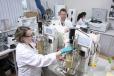
The National Deuteration Facility offers the facilities and expertise to produce molecules where all or part of the molecular hydrogen is replaced with deuterium. This enables complex investigations of the relationship between the structure of molecules and their function using neutron scattering and other techniques.
With world-class experts in groundwater and major contributions in this area over two decades, ANSTO completed a major project report on Improving groundwater sustainability and renewability using isotope hydrochemistry in NSW for the Department of Planning and Environment (NSW) and National Water Grid earlier in the year.

Singapore researchers publish findings of link between proteins of archaea and eukaryotes despite being separated by more than 2 billion years of evolution.
ANSTO groundwater experts have collaborated with the NSW Department of Planning, Industry and Environment on a comprehensive survey of groundwater resources in the state.


Multi-million dollar Australian Cancer Research Foundation (ACRF) Detector launched at the Australian Synchrotron,
Powder diffraction and X-ray fluorescence microscopy support investigation of pigments in rock art.
Monash University, University of Queensland and Australian National University researchers have used ANSTO’s Australian Synchrotron in their study of meteorites found on Earth that could be used in future to find evidence of life on the planet Mars.