


Showing 1 - 20 of 55 results
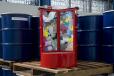
Managing Radioactive Waste
ANSTO has safely managed its radioactive waste for over 60 years. Waste is managed in accordance with national and international standards.

Former student with the University of Sydney
Profile

Capabilities
ANSTO provides access to specialised facilities and capabilities by application. Please ensure that you contact the relevant ANSTO scientist for advice before submitting a proposal.

Social media terms of engagement
Creating a safe, inclusive and respectful online community for all.
Pass the salt: can sodium power the 21st century
Atomic structure of new cathode material for sodium ion batteries helps explain long life
Peak Resources commissions ANSTO Minerals to operate Ngualla Rare Earths Pilot Plant
As a result of the successful optimisation testwork, Peak Resources has commissioned ANSTO Minerals to operate the pilot plant to validate the optimised “Alkali Roast” process flowsheet that has been selected by Peak for the Bankable Feasibility Study. The study is expected to be completed by early 2017.
Nuclear research techniques are an important tool for environmental scientists to understand past climates and anticipate the future
ANSTO has played a formative role and continues to make important contributions using nuclear and isotopic techniques to understand past climates and patterns of change, maintain water resource sustainability and provide insights into the impact of contaminate in the environment.

Online learning
Discover the amazing world of nuclear science from your classroom. Join us for Meet an Expert, Nuclear Science Inquiry Skills, Junior Science, and Online Depth Study sessions for Chemistry, Physics and Investigating Science.
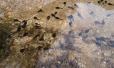
Radioisotope Tracer Techniques
Radioisotope tracing technique are used to understand the uptake of contaminants, and nutrients, bioaccumulation, by aquatic organisms and terrestrial plants.

Neutron Activation Scientist
Role at ANSTO

Actinide and heavy ion isotopic analysis
ANSTO has the capability to analyse heavy isotopes such as 129I, platinum group elements, 236U and Pu isotopes.

Ion beam analysis techniques
When an energetic ion beam hits a sample it will interact with the atoms through a number of very complex interactions. By detecting and measuring the reaction products resulting from the various interactions and their intensities, you can obtain quantitative data on the sample's constituent elements and their spatial distribution.

Neutron Activation Analysis and Neutron Irradiation
Neutron Activation Analysis (NAA) is a highly sensitive method of quantitative elemental analysis. There is a wide range of potential applications for neutron irradiations.

2024 Think Science Competition Summary and Results
Think Science! 2023 Summary and Results
2025 Think Science Competition Summary and Results
Think Science! 2025 Summary and results

Beamtime Guide, Technical Info and Updates - MX1 & MX2
The Macromolecular Crystallography beamlines at the Australian Synchrotron (MX1 and MX2) are general purpose crystallography instruments for determining chemical and biological structures.
Today we celebrate 65 years since the official opening of Australia’s first nuclear research reactor in 1958
ANSTO is celebrating the official opening of HIFAR, Australia’s first nuclear reactor, sixty-five years ago.
The history of ANSTO began 70 years ago with the Atomic Energy Act 1953
Leveraging over half a century of knowledge in the safe management of radioactive waste
ANSTO's Chief Nuclear Officer shares insights on the safe management of Australia's nuclear waste.